


We have two powerful Medrashim from the Yalkut Shimoni that are especially relevant to our times and, hopefully, will offer us encouragement.
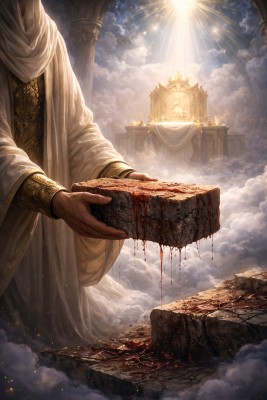
At the end of Parshat Shemot (176), the Medrash tells the story of Rachel. During the three months of gezeirat ha’kash, when Pharaoh decreed that straw would no longer be provided for brickmaking, Rachel was helping her husband complete his daily quota. She was pregnant, and in the mud and chaos she miscarried. The fetus was mixed into the mortar and formed into a brick.
They cried out to Hashem from the anguish of their desperate situation. The malach Micha’el descended and took the brick up to Shamayim, placing it before the Kisei HaKavod. That very night, the bechorim of Mitzrayim were killed.
Now, this story could not have occurred immediately before makat bechorot. The backbreaking labor had already ceased at makat kinim, when the dust was struck and the work stopped. Additionally, gezeirat ha’kash took place three months before the makot even began. (There is another source that places this episode during the period when Moshe was in Midyan.) Either way, the malach Micha’el took the brick for safekeeping—until the moment it would be brought out, by makat bechorot, to highlight the Mitzrim’s extreme guilt and justify the terrible punishment they received.
In Parshat Beshalach (241), the Medrash records several accusations made by the Sar of Mitzrayim, Uzah. (Every nation has a malach, or sar, in Shamayim.) Uzah came before Hashem to defend his nation and argue that Bnei Yisrael should be returned to slavery. Hashem summoned Micha’el, the Sar of Bnei Yisrael, to hear the case.
Uzah began: “Bnei Yisrael were destined to remain slaves under me for four hundred years, and that time has not yet elapsed. Allow me to return them to Mitzrayim!”
Micha’el had no response. Hashem Himself defended them, saying: “I told Avraham Avinu that they would be in a land not their own for four hundred years, but I never specified Mitzrayim. Furthermore, I calculated that period from the birth of Yitzchak, when Avraham lived among the Plishtim as a foreigner. That time has already passed. Now they may leave.”
Uzah retreated—but only temporarily.
At the Yam Suf, Uzah returned with a new accusation. “Hashem,” he argued, “You want to drown the Mitzrim? Why? They never drowned or killed any of bnei Yisrael. Slaves must be kept busy to remain obedient; any deaths are simply part of the system. Besides, bnei Yisrael already took all of Mitzrayim’s wealth as payment. Why should the Mitzrim be drowned?”
Hashem convened all the malachim and said, “Judge between Uzah and Me.”
Hashem then presented His case: “I brought a famine upon Mitzrayim and sent Yosef to save them. Bnei Yisrael came down as honored guests. The Mitzrim chose to enslave them with cruelty. I heard bnei Yisrael’s desperate cries. Who told Pharaoh to enslave them at all? They had already fulfilled their decree simply by being strangers in your land.
“I sent Moshe and Aharon to Pharaoh, and he mocked them. He checked his list of g-ds and could not find Me. Moshe told him that Hashem created the world and even forms babies in their mothers’ wombs. Pharaoh responded, ‘I created myself and the Nile!’ Because he denied My existence, I sent ten makot. Finally, he released bnei Yisrael—only to pursue them again. And now you claim they are undeserving of punishment?”
All the malachim declared: “Mitzrayim is guilty!”
Uzah conceded—but pleaded for mercy anyway. At that moment, the malach Gavriel brought out the brick and said: “These are the people who tortured Your children—and for them he asks rachmanut?”
Immediately, Hashem shifted to midat ha’din, and the Mitzrim were drowned.
The Mitzrim cried for rachmanut because of their own suffering. That cry—after everything they had done—sealed their fate. The Beit HaLevi explains that this was the worst plea they could have made. They knew they were guilty and still demanded mercy. That hypocrisy unleashed the full force of midat ha’din.
Perhaps this explains why Gavriel, whose midah is gevurah, was the one to present the brick. Only gevurah could activate the strict justice required at that moment. Notably, both Medrashim—makat bechorot and the Yam Suf—occurred at times when midat ha’din needed to be displayed in its full intensity.
The rule is that whatever we witness in this world reflects what is happening in Shamayim. The true battles occur there. When nations are inflamed and attacking each other below, their sarim are battling above. When the nations accuse and attack klal Yisrael, it means that those accusations are being voiced in Shamayim.
And when we hear cries of mercy on behalf of the obvious enemy, we should recognize the pattern: this is exactly how the Mitzrim behaved.
Who cries for the Ukrainians under constant attack? For the victims of terror across Africa? For the tens of thousands murdered in Iran? Very few. Yet the world erupts in outrage over Israel’s treatment of the Palestinians and Gazans.
Those who support our enemies are sealing their own fate. Their cries of “rachmanut” are precisely what will bring about their downfall.
By the time you read this, who knows what will be unfolding between the United States and Iran. May we merit to see the final chapter soon, with the arrival of Moshiach, speedily in our days.
R’ Dovi Chaitovsky and his family have the zechut to live in Eretz Yisrael, where he dedicates himself to Torah learning and teaching in Yerushalayim Ir HaKodesh. His divrei Torah often draw from the shiurim of Rav Yisrael Altusky, shlit”a, Yeshivas Torah Ore, Yerushalayim which can be heard at www.kolhalashon.com.
Drowning In Tears
Typography
- Smaller Small Medium Big Bigger
- Default Helvetica Segoe Georgia Times
- Reading Mode