


What makes a relationship real?
It is a question that touches every part of life: marriage, parenting, friendships, family ties, and professional relationships. During an engaging conversation on Chazaq’s Torah Talks, Rabbi Yaniv Meirov sat down with bestselling author, therapist, and lecturer Dr. David Lieberman to explore the habits, attitudes, and choices that help relationships flourish—and the mistakes that quietly undermine them.
The discussion began with Dr. Lieberman’s then-upcoming book, Mind Reader, which examines how language patterns, body language, and communication styles often reveal more than people realize. While not “mind reading” in a psychic sense, the book teaches readers how to better understand what others may be thinking and feeling, even when they are not entirely honest with others—or even with themselves. Whether in business, friendships, marriage, or family life, Dr. Lieberman explained that understanding people is one of the most valuable skills a person can develop. Yet before understanding others, a person must first learn how to communicate effectively.
Many relationships remain pleasant on the surface while important issues quietly go unspoken. Every relationship eventually develops an “elephant in the room”—a disappointment, frustration, or concern that both people recognize but neither wants to address. Problems that are ignored rarely disappear. More often, they sit beneath the surface and grow larger with time. At the same time, Dr. Lieberman cautioned against rushing into difficult conversations. As a child, he recalled being taught to count to thirty before reacting in anger. The lesson remains valuable, but for adults he suggested an even more powerful strategy: wait twenty-four hours before bringing up a sensitive issue.
Strong emotions have a way of convincing people that everything must be addressed immediately. A day later, many situations look very different. Sometimes the anger fades. Sometimes a person realizes the issue was not nearly as important as it first appeared. Occasionally, the conversation no longer needs to happen at all. If a discussion is still necessary, how it is approached often matters more than the issue itself. One of Dr. Lieberman’s most practical pieces of advice involved changing a single word. Too often, difficult conversations begin with accusations: “You did this,” or “You always do that.” The moment a person hears those words, the natural reaction is to defend himself. Instead, he encouraged using “I” statements and simply expressing how one feels. When people stop assigning blame and describe their feelings honestly, it becomes much easier for the other person to listen rather than prepare a defense. The goal is not to win an argument but to strengthen the relationship.
That theme of personal responsibility resurfaced throughout the conversation. Dr. Lieberman described how many couples arrive seeking advice armed with what he jokingly called a “phone-book-sized list” of everything their spouse needs to change. They can identify every weakness, every irritation, and every mistake. His response is always the same:
“What can you do differently?”
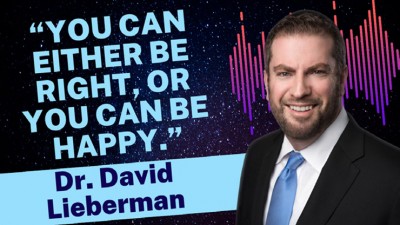
The question often catches people off guard. Rather than focusing on what another person should change, Dr. Lieberman encourages people to focus on the one thing they can actually control: themselves. He explained that people frequently underestimate the influence they have within their relationships. A small change in attitude, communication, or behavior can completely alter the dynamic between two people. When one person chooses to respond differently, the relationship itself often begins to change. As one of his rebbeim once told him, “You can either be right, or you can be happy.”
Perhaps nowhere is this lesson more important than in the area of appreciation. Dr. Lieberman offered an observation that drew smiles from listeners:
“Sometimes we show more appreciation to the tollbooth collector than to our own spouse.”
People routinely thank strangers for small courtesies while taking the efforts of those closest to them for granted. Yet relationships flourish when appreciation is expressed consistently. Gratitude changes both people. The person receiving thanks feels valued, and the person expressing it becomes more aware of the blessings already present in his life. Dr. Lieberman cited Rabbi Dr. Abraham Twerski, who observed that some people struggle to express gratitude because doing so forces them to acknowledge that they needed help in the first place. Yet healthy relationships require exactly that kind of humility. In many ways, Judaism itself is built around this principle. Jews recite blessings throughout the day for food, fragrances, thunder, seeing an old friend, and even after leaving the bathroom. Gratitude is not meant to be occasional. It is meant to become a way of life.
The conversation then turned to loyalty. According to Dr. Lieberman, one of the greatest signs of a true relationship is knowing that someone will still be there when life becomes difficult. It is easy to be a friend when everything is going well. Loyalty is tested when circumstances become challenging. Loyalty allows people to be themselves. It gives them confidence to speak honestly without worrying that the relationship will disappear the moment things become uncomfortable. Trust is what turns acquaintances into lifelong friends and strong families.
One of the evening’s most thought-provoking discussions centered on balancing communal involvement with family responsibilities. Many people devote enormous energy to helping others, volunteering, supporting institutions, and serving the community. While these efforts are noble, Dr. Lieberman warned that they must never come at the expense of one’s own family. He shared a distinction between passion and obsession. A passionate person brings energy and inspiration home. An obsessed person often leaves little room for anything else. A child notices when a parent is available for everyone else but rarely available at home. A spouse notices when community commitments consistently take priority over family needs. Dr. Lieberman offered a powerful perspective:
“If helping others means constantly taking time and attention away from your family, you’re not giving—you’re robbing.”
Real chesed should strengthen the home, not weaken it. His advice was straightforward: involve the family in the process. Ask permission. Make them partners in the mitzvah. When family members willingly share in the sacrifice, the act becomes something they accomplish together rather than something imposed upon them.
As the conversation drew to a close, Dr. Lieberman returned to a theme that ran through nearly every answer he gave that evening. In real estate, people often say, “Location, location, location.” In relationships, he suggested, the formula is much simpler:
“Positivity, positivity, positivity.”
The more a person looks for what is good—in a spouse, a child, a friend, and even in himself—the more his world begins to change. Relationships rarely fall apart because people stop caring. More often, they suffer because people stop noticing. A positive word, a sincere thank-you, a little patience, and a willingness to see the best in others can strengthen a marriage, bring a family closer together, and transform the atmosphere of an entire home.
For Dr. Lieberman, the secret to real relationships is ultimately simple: stop trying to change everyone around you, appreciate the people already in your life, and never underestimate the power of choosing positivity.
Rabbi Yaniv Meirov is the mara d’atra of Kehilat Charm Circle in Kew Gardens Hills and serves as Chief Executive Officer of Chazaq. Now 222 episodes strong, Chazaq Torah Talks continues to inspire by showing that Jewish growth and survival are shaped through lived experience, commitment, and connection.
The Secret To Real Relationships
Typography
- Smaller Small Medium Big Bigger
- Default Helvetica Segoe Georgia Times
- Reading Mode