


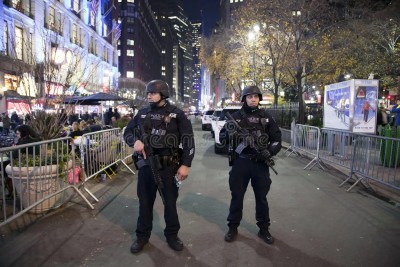
For Jewish New Yorkers who have watched anti-Israel demonstrations unfold outside synagogues, schools, and community institutions, the NYPD’s Strategic Response Group (SRG) offered a measure of reassurance. Its specially trained officers were equipped to respond when large gatherings threatened to escalate, providing a visible police presence capable of confronting serious disturbances.
That reassurance now faces uncertainty following Mayor Zohran Mamdani’s November 16 announcement that the approximately 500-officer unit will be disbanded, prompting a sharp warning from Queens Council Member James Gennaro.
“If there is one thing protests over recent years have taught New Yorkers, it is that ‘peaceful demonstrations’ can escalate quickly,” Gennaro stated. “That is precisely why we need a well-trained, coordinated response that can protect our officers, protesters and the public.”
Established in 2015 under former Police Commissioner Bill Bratton, the SRG combined specialized crowd management, rapid deployment, and counterterrorism support. Its officers could reinforce local precincts during large demonstrations, respond to major emergencies, and provide heavily armed security at sensitive locations.
Under Mamdani’s restructuring, those responsibilities will be divided among several units. A newly created Patrol Support Division will handle crowd-management duties using vetted officers who receive specialized training but spend most of their time performing regular patrol-related assignments. A separate 30-member First Amendment Support Team will focus on communication and de-escalation, working alongside a civilian-led Community Dialogue and De-escalation Division whose personnel will have neither weapons nor arrest powers.
The 30-member team is not intended to replace the SRG’s entire force. Counterterrorism responsibilities, including heavy weapons deployments at critical infrastructure, will instead be consolidated within the NYPD’s Intelligence and Counterterrorism Bureau.
The changes also prohibit kettling, a tactic used to surround demonstrators and restrict their exits, along with tear gas and long guns during First Amendment activities. Pepper spray will no longer be permitted as a general crowd-management tool.
Mamdani argues that separating protest response from counterterrorism will better protect constitutional rights while maintaining public safety. Police Commissioner Jessica Tisch has endorsed the restructuring, stating that she would never support changes that deprive officers of the resources necessary to confront serious threats. Civil liberties advocates have also supported the move following years of allegations of excessive force against protesters.
Gennaro, however, questions whether the new arrangement can match the readiness and experience of a dedicated specialized unit, particularly during rapidly escalating confrontations or active-shooter emergencies.
The debate extends beyond New York. London’s Metropolitan Police maintains a Territorial Support Group specializing in riots, major public disorder, and other demanding operations. Although London’s policing structure differs from New York’s, its continued reliance on dedicated public-order officers illustrates the importance major cities place on maintaining specialized capabilities.
For Jewish communities, the concern is especially immediate. When demonstrators gather outside a synagogue, police must balance the constitutional right to protest with the safety of worshippers entering and leaving. The ability to separate opposing groups, prevent intimidation from escalating into violence, and mobilize trained personnel quickly can make a critical difference.
“This is uncharted territory, and the stakes are far too high to gamble with public safety,” Gennaro warned, urging the mayor to reverse course.
The NYPD insists that its counterterrorism capabilities and ability to respond to dangerous situations will remain intact. Whether the new Patrol Support Division can deliver the same level of specialized readiness remains an important unanswered question.
For Jewish New Yorkers seeking reassurance amid heightened security concerns, the ultimate measure will not be the name of a police unit, but whether officers can respond swiftly and effectively when a peaceful demonstration becomes something far more dangerous.
Gennaro Warns NYPD Shakeup Could Weaken Response to Violent Protests
Typography
- Smaller Small Medium Big Bigger
- Default Helvetica Segoe Georgia Times
- Reading Mode