


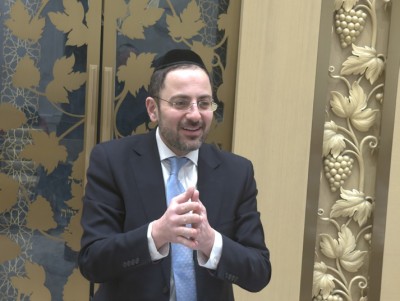
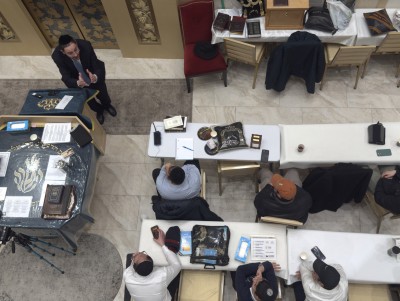
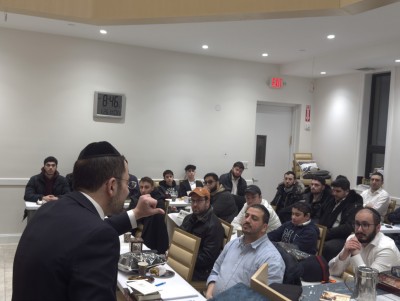
On a bitterly cold Monday evening, January 26, Congregation Ohr HaTorah of Kew Gardens Hills became a place of warmth, reflection, and spiritual elevation. Despite icy sidewalks, snow-packed streets, and difficult parking conditions, a dedicated tzibur gathered for a powerful program presented by Chazaq and Meorot titled “How To Bring Blessing Into Our Lives.”
The evening featured Rabbi Yaakov Mizrahi and Rabbi Maor Bendel of Meorot, whose words blended deep Torah insight with practical guidance for daily life—messages that resonated even more strongly given the challenging conditions outside.
A Night Dedicated In Memory
The program opened with heartfelt remarks from the sponsor’s grandson, who thanked the audience for braving the cold and emphasized the kiddush Hashem created simply by showing up. He shared that the evening was held in memory of his grandfather, Gavriel Ben Shireen, marking his 27th yahrtzeit, and also included Amnun Ben Kisyo for ilui neshamah.
He described his grandfather as a profoundly giving individual—someone devoted to chesed and deeply involved in the lives of his grandchildren. When parents were busy working, he explained, his grandfather often stepped in to fill that gap, offering presence, guidance, and care. With that tribute, he introduced Rabbi Yaakov Mizrahi.
Understanding The Purpose Of The Makot
Rabbi Mizrahi opened by connecting the evening’s theme to the Torah portions describing yetziat Mitzrayim and the geulah. He posed a fundamental question: If Hashem wished only to punish Pharaoh, why were the Ten Makot all different? Why not repeat the same plague until Pharaoh finally surrendered?
The answer, he explained, lies in da’at—true awareness. Pharaoh lacked the most basic understanding of Hashem’s existence and authority. “Who is Hashem that I should listen to Him?” Pharaoh declared. The Makot were not acts of revenge; they were lessons meant to teach.
Rabbi Mizrahi explained that the Makot were structured in stages, each with a distinct mission. The first set taught that Hashem exists. The Nile—worshipped as a deity—turned to blood, demonstrating that Egypt’s perceived source of blessing was powerless. The second set revealed hashgachah pratit, Hashem’s precise involvement in every detail of creation, distinguishing clearly between Egyptian and Jewish lives. The final set eliminated the notion of any competing force, including the sun, affirming that ein od milvado—there is none besides Him.
From Pharaoh To Ourselves
Rabbi Mizrahi stressed that the Makot were not only for Pharaoh or the Egyptians. They were equally for Klal Yisrael—then and now. It is easy to read the Torah and laugh at Pharaoh’s stubbornness, but the real question is personal: Do I truly live with the awareness that Hashem runs the world?
He illustrated this idea with vivid, contemporary examples—snowstorms, cancelled flights, disrupted plans, businesses that benefit while others struggle. Every snowflake, he said, lands exactly where Hashem intends, measured with infinite precision. Recognizing this brings calm. Our role is not to control outcomes, but to serve Hashem with faith, Torah, and mitzvot.
The Power Of Torah—Especially Now
Turning to the period of Shovavim, Rabbi Mizrahi emphasized the unparalleled power of Torah learning. V’talmud Torah k’neged kulam—Torah outweighs all other mitzvot. Even a few minutes of learning sustains the world.
He acknowledged the effort required for the audience to attend the program—icy roads, exhaustion, disrupted routines—and reminded them that lefum tza’ara agra: reward is measured by effort. Torah learned under challenging circumstances carries even greater spiritual weight.
Turning Sensitivity Into Action
Rabbi Maor Bendel followed with a complementary message, shifting the focus from belief to behavior. Sensitivity, he said, is not enough if it remains internal. True blessing enters a person’s life when care translates into action.
He shared stories illustrating the difference between words and deeds, stressing that saying “I care” or “I feel your pain” must be accompanied by tangible help. One striking example described a rabbi who blessed a widow—and then immediately went out to personally resolve her financial crisis. Empathy, Rabbi Bendel explained, must move the feet, not only the heart.
Lessons From A Snowstorm
The storm itself became a living metaphor. Rabbi Bendel described watching people shovel snow—some thoughtfully clearing paths for others, others thoughtlessly dumping snow onto neighboring properties. He contrasted selfish convenience with responsibility: helping an elderly tenant, assisting a struggling neighbor, or ensuring someone else could leave safely.
One act of kindness, he explained, often sparks another. Good deeds create momentum. When one person steps up, others follow. Hashem notices every effort, even when no one else does.
Seeing People, Saving Lives
Perhaps the most emotional portion of Rabbi Bendel’s remarks focused on the human need to be seen. He shared powerful stories of individuals pulled back from despair by a single moment of recognition—a smile, a greeting, a pause to care.
People may forget the exact words spoken to them, he noted, but they never forget how someone made them feel. Seeing another person, truly seeing them, is light. Ignoring them is darkness.
A Night That Spoke For Itself
As the evening concluded, one truth stood out clearly: the very act of gathering on such a difficult night was itself a statement. Torah was valued. Community mattered. Effort counted.
The learning and inspiration generated that night elevated the neshamah of Gavriel Ben Shireen and reinforced a timeless message—that blessing enters our lives through faith, Torah, and actions rooted in genuine care for others.
In the end, the cold outside only magnified the warmth within.
Snow, Emunah, And Action: A Night Of Blessing In Kew Gardens Hills
Typography
- Smaller Small Medium Big Bigger
- Default Helvetica Segoe Georgia Times
- Reading Mode