

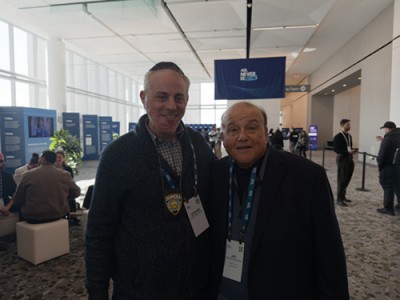
At the ADL's most urgent summit yet, Jonathan Greenblatt sounded the alarm — and thousands answered. What happened next, in the hallways and huddles, on the conference floor and in corporate boardrooms, is a story about a community refusing to fight alone.
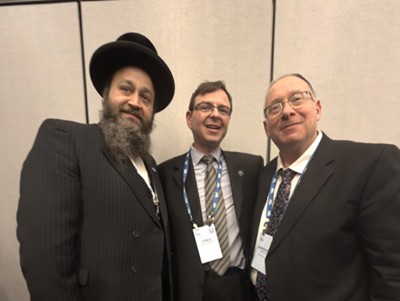
There were the speeches. There were the statistics. There was Jonathan Greenblatt on the main stage warning of the most dangerous surge of antisemitism in living memory. All of that mattered — and all of it was real. But the people who spent two days at Never Is Now will tell you that the most powerful moments often happened somewhere else entirely. In the corridors. Over coffee. In the accidental, lingering conversations between sessions that no agenda could have planned. This was not simply a conference. It was a community coming together — to learn, to grieve, to compare notes, to find allies, and, perhaps most unexpectedly, to feel hope.
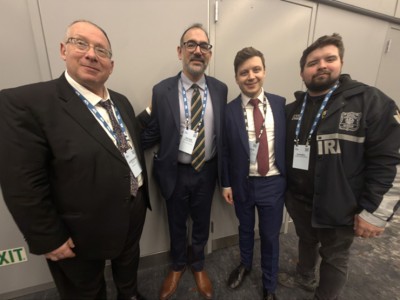
Thousands arrived from across the country and around the world. Policymakers sat beside activists. Campus leaders sat beside corporate executives. Holocaust educators sat beside first-generation advocates who had only recently found their voice. And woven through all of it was a recognition that in this particular moment in Jewish history, none of them should be doing this alone.
It felt like a reunion — seeing people you know, learning and growing, and seeing hope. Knowing you are not alone in this fight. That is the magic of the experience.
The State of Hate: What Greenblatt Told a Full House
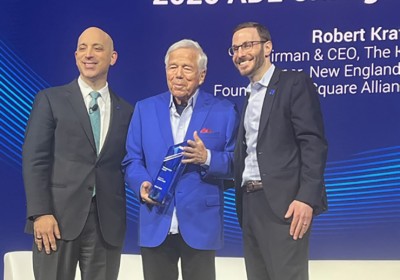
ADL CEO Jonathan Greenblatt opened the summit with a blunt accounting of where things stand. The numbers alone are staggering: 9,354 antisemitic incidents across the U.S. in 2024 — the highest in 46 years of ADL tracking, a 344% increase over five years. One in four Americans now holds antisemitic attitudes. And Jews, who make up just 2% of the U.S. population, are the targets of roughly 70% of all faith-based hate crimes.
But Greenblatt made clear the threat is not just statistical. He described the West Bloomfield, Michigan car-bomb attempt on Temple Israel — where 106 children were in daycare when the attack was thwarted. He named the full spectrum of perpetrators: white supremacists, Islamist extremists, conspiratorial politicians, and media figures.
The hate, Greenblatt said, is "everything, everywhere, all at once." He named it across every ideological vector — refusing the convenient fiction that antisemitism belongs to one side of the political spectrum. And he closed the door on a growing debate about institutional priorities with characteristic directness:
The stakes, he argued, reach beyond any one community. A country riddled by antisemitism is one where democracy itself is in danger — for everyone. It was a warning, but also a call: the fight against antisemitism is not a Jewish problem. It is an American one.
The Magic in the Hallways
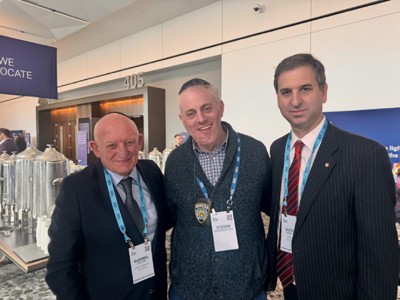
If the main stage set the urgency, the corridors carried the soul. Never Is Now attracts a genuinely unusual mix — and the unscheduled collisions between people are part of what makes it singular. Professionals connected with students. Advocates met philanthropists. Shlichim — emissaries from Israel — shared their perspectives with Hillel chapter leaders who had never spoken to someone who had lived through October 7th firsthand.
The conversations were extraordinary in their range. Seasoned organizational leaders compared notes with people who had started fighting back less than 18 months ago. Students described what antisemitism looks like on their specific campus, in their specific classroom, in their specific Greek life chapter. And in many cases, they heard back: "I know exactly what you're describing. Here's what worked for us."
It was, more than one attendee said, like a family reunion for a family that didn't fully know it existed.
Voices from Israel: Learning What We Took for Granted
The Jewish Agency's shlichim occupy a unique and disorienting position. They come from a country where being Jewish is the baseline of everyday life. Antisemitism, as a lived reality, is largely someone else's story. And then they arrive here.
One shaliach I spoke with was candid about this learning curve. "I have to admit that I knew so little about antisemitism before I came to America," he told me. "I learned the most from ADL." He had attended Never Is Now the previous year and described it as a turning point — not just in how he understood diaspora Jewish life, but in what he felt responsible to bring back. "I hope to educate more people in Israeli society of how it feels to be a Jew in America."
His approach centers on a deceptively simple idea: Jewish pride as a shield. "When you see that the benefit of being Jewish is more than the disadvantages, you strongly keep doing it." In a climate where young American Jews are increasingly pressured to hide their identities — to swap names on delivery apps, to remove mezuzot, to stay quiet about Israel — this reframing is not trivial. It is radical.
A second shaliach described his role on a college campus where post-October 7th tensions have made Jewish students feel they "don't necessarily belong." His mission: to create a safe space to "make them feel welcome — to be comfortable being who they are, regardless of where they came from, what language they speak, or what God they believe in."
A third developed a year-long antisemitism program after community members came to him with their own experiences. "We focused on how we are standing up and speaking up — for the small person, for the big boss." A fourth offered perhaps the sharpest framing: show up, counter fake news, and be the person they can come to with questions. "Just be proud — show them that during Hatikvah, we're going to stand strong, and we're going to sing it together."
Reclaiming the Z-Word: The American Zionist Movement Fights Back
If the shlichim are building Jewish pride at the ground level, then Mark Levenson and Herbert Block of the American Zionist Movement are waging that same battle at the level of language itself — because before you can be proud of something, the word for it has to mean something worth being proud of.
I asked them directly: when did "Zionist" become a dirty word? Levenson, AZM's president since December 8th — didn't hold back. "Zionism unfortunately has become a dirty word, and we need to make it a good word again — a wonderful concept, like it always was when we were growing up."
Herbert Block, AZM's Executive Director, brought history into the room. He described how Israeli President Herzog, speaking at AZM's December conference, recalled his father's time as Israel's ambassador to the UN — the era of the infamous "Zionism is Racism" resolution. Back then, the Jewish community's response was immediate and defiant: people wore buttons that read, simply, "I am a Zionist." AZM presented Herzog with one of those original buttons when they visited him in Jerusalem last month.
"It was a day when people were proud to be Zionists," Block said. "It didn't matter whether you were right, left, religious, secular." AZM's coalition of 51 national Jewish Zionist organizations runs the full gamut of the political, religious, and ideological spectrum — united by a single thread: Zionism as the Jewish people's yearning for return to their ancestral homeland and a Jewish democratic state in the land of Israel.
On whether anti-Zionism and antisemitism are the same thing, Levenson was blunt: "There's no confusion for us. When you're an antisemite, you're an anti-Zionist, and when you're an anti-Zionist, you're an antisemite." Block reinforced the point from nine years at AZM: "Sadly, we've seen that attacks on Zionism are really attacks on the Jewish people. The argument has been made for us — by events."
The Boardroom Is the Battlefield: JLens and the Power of the Proxy
Not every front in this fight looks like a rally, a classroom, or a conference floor. Some of the most consequential battles are being waged in shareholder meetings — and one organization has been waging them for over a decade with growing force.
Ari Hoffnung, Managing Director of JLens, reframed the landscape of Jewish advocacy in about ten minutes. For decades, the Jewish community focused its energy on government — lobbying Congress, building influence on Capitol Hill. That work matters. But something has shifted.
Meta serves three billion daily users. Amazon's cloud infrastructure powers sovereign governments. The algorithms inside these companies determine what spreads and what gets buried — shaping daily life in ways that rival the decisions of UN member states. And yet, until recently, the Jewish community was largely absent from that room.
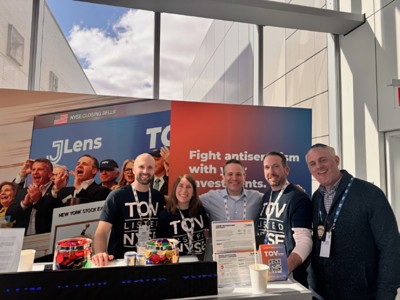
JLens's answer: Jewish institutions already have endowments. They already have capital. JLens pools that capital, invests it in the 500 largest U.S. companies, and shows up at annual meetings as a shareholder — with the legal right to file resolutions, demand explanations, and vote proxies.
The results are concrete. A BDS-backed proposal targeting Amazon’s $1.2 billion cloud contract with Israel received 34% shareholder support in 2023. After an aggressive JLens and ADL campaign, it fell to ~17% in 2024 (per public tallies) — with Charles Schwab and State Street changing their vote from 2023 to 2024. A resolution targeting RTX Corporation’s Iron Dome contracts received just 5.5% of the vote (per public tallies). JLens notified Target that there were Holocaust denial books in its product listings, which the company subsequently removed. A JLens proposal urging Meta to take stronger action against hate on its platforms received support from 46.8% of independent shareholders (per public tallies).
Ari described three zones where antisemitism shows up in corporate America: products, platforms, and workplaces. That last one hit close to home. I recently spoke with someone who returned from vacation to find a napkin draped over the small Israeli flag on his desk. It sounds small. Sit with it: a Jewish employee, returning to work, finding his identity quietly suppressed. That's not a fringe incident — it's a pattern. And it's one JLens is systematically pushing back against.
In February 2025, JLens launched the TOV ETF on the New York Stock Exchange — a publicly traded fund giving any investor the ability to hold stock in America’s 500 largest companies while JLens exercises advocacy on their behalf. Nearly 40 Jewish institutions have invested over $400 million. The infrastructure is built. The capabilities are real.
Pro-Semitism as Strategy: Yossi Farro and the Power of Jewish Joy
Not every weapon against antisemitism looks like a policy win or a shareholder vote. Some of them look like a rapper in a kippah showing up at a hedge fund manager’s office with a pair of tefillin.
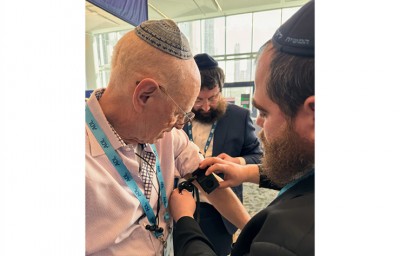
Yossi Farro has made a name for himself by doing exactly that — wrapping tefillin on executives, celebrities, and influencers, one unexpected encounter at a time. It started organically: a chance meeting with comedian David Burd (Lil Dicky) on the streets of LA, then James Franco, then Jeremy Piven, then a growing roster of tech founders and public figures. The moment that crystallized the project’s power came last December, when Farro wrapped Bill Ackman — the billionaire hedge fund manager’s first time ever putting on tefillin at 58. Ackman got emotional. Farro spoke about his father looking down from heaven, “shlepping nachas.” It was, Farro told me, a beautiful experience.
I asked him how he gets access — the White House, Palantir founder Joe Lonsdale, Shopify president Harley Finkelstein. His answer was disarmingly simple. “It really just flows,” he said. Twitter DMs. Instagram comments. Shabbat Shalom messages sent on a long shot. “Literally, every single person is another story.”
Behind the charm is a deliberate philosophy. Farro has always been fascinated, he said, by the most successful Jews in the world — hedge fund managers, NBA team owners, tech executives — and believes that platforming them sends a message to the next generation: this is attainable. People who started in yeshivas made it to the highest levels of business. That story deserves to be told, loudly and proudly.
I put it to him directly: with antisemitism on the rise, we need more pro-Semitism — more Jewish joy, more Jewish resilience. He agreed without hesitation. That’s the sweet spot he’s found. His wishlist for 2025 includes Mark Zuckerberg, Sergey Brin, Timothée Chalamet, Adam Sandler, and — he said it with a grin — possibly even Drake. His stated goal: bring Mashiach.
It sounds unconventional. But in a moment when Jewish identity is under pressure — when people are hiding mezuzot and swapping names on delivery apps — there is something genuinely radical about showing up in someone’s office and saying: be proud of this. Let the world see it.
The Thread That Connects It All
Jonathan Greenblatt called it "everything, everywhere, all at once." He was talking about hatred. But the same phrase, in the best possible sense, describes the response that Never Is Now assembles each year.
What does an Israeli emissary teaching teenagers about Jewish pride have in common with a rapper wrapping tefillin on a billionaire, a shareholder proposal challenging Meta’s algorithm, or Zionist leaders fighting to reclaim a word? All of it is rooted in the same insight: antisemitism in 2025 is not a single enemy with a single address. It lives in dorm rooms and boardrooms, on social media feeds and in workplace break rooms, in the semantic slide of a slur and in the fine print of a proxy ballot. Defeating it requires presence everywhere.
Greenblatt said it plainly: fighting antisemitism and building Jewish life are not competing priorities — they are inseparable preconditions. The shlichim understand that. The AZM understands that. JLens understands that. Yossi Farro understands that. And in the hallways of Never Is Now, thousands of people who arrived as individuals left as something closer to a coalition.
Ari Hoffnung closed our conversation with characteristic calm: "There's a lot of work ahead of us." Mark Levenson closed his with a battle cry disguised as a reminder: we should not be afraid to say we are Zionists. The shlichim closed theirs with a promise — to show up again, for the communities that need them. Yossi Farro closed his with a goal so audacious it could only be Jewish: bring Mashiach. And Greenblatt closed the summit with a challenge that has not left me since: a country riddled by antisemitism is one where democracy is in danger — for everyone.
The oldest hatred in the world is adaptive. It finds new platforms, new language, new institutional cover. Our response has to be just as adaptive — and just as relentless. Every arena. Every tool. Every one of us.
No one fights alone. Never is now.
Aaron Herman is a nonprofit fundraiser, video journalist, and growth strategist focused on Jewish storytelling, advocacy, and community mobilization. His reporting has been featured on national and Jewish media outlets. He holds a BA from Binghamton University and an MPA from NYU's Robert F. Wagner Graduate School of Public Service. He lives in White Plains, New York, with his wife Tani and their sons Michael and Ari.
Never Is Now. No One Fights Alone.
Typography
- Smaller Small Medium Big Bigger
- Default Helvetica Segoe Georgia Times
- Reading Mode