

Why The Upcoming Gedolim Kinus In Queens Is A Turning Point For Our Community
Every so often, a moment arrives that transcends an ordinary communal event and becomes part of a community’s history. For the Bukharian and broader Sephardic community of Queens, this coming Tuesday, June 16, is one of those moments.
A historic delegation of some of the most revered Torah leaders of our generation will arrive in our borough as part of the ongoing mission of Keren Olam HaTorah, an international effort launched to preserve the future of Torah learning in Eretz Yisrael. Queens was selected not merely because of its size, but because it has become one of the most vibrant centers of Sephardic and Torah life in North America, with deep and enduring ties to the yeshivot and kollelim of Eretz Yisrael.
For many families, the question is no longer whether Torah institutions are under pressure. The question is whether the generation that inherited the sacrifices of Samarkand, Tashkent, and Bukhara will step forward to preserve that legacy for the next generation.
A Crisis That Cannot Be Ignored
Over the past three years, political and judicial battles surrounding draft-age yeshivah students in Eretz Yisrael have triggered severe sanctions designed to squeeze the economic baseline of Orthodox life. Millions of shekels in operational funding were frozen. Daycare subsidies, a critical lifeline for young parents, were abruptly canceled, while Bituach Leumi (National Insurance Institute) discounts were restricted.
This is no longer a temporary crisis; it is a new reality. The financial freeze left tens of thousands of bochurim and avreichim, along with their families and institutions—including many prominent Sephardic yeshivot—facing severe uncertainty. The sheer scale is staggering: Keren Olam HaTorah reports supporting 120,000 lomdim and their families, with 350,000 people directly affected across 1,489 yeshivot and kollelim. To maintain operations and ensure that Torah learning continues uninterrupted, the initiative requires an immense annual budget of $144,000,000.
"The crisis has reached a point where some of the greatest Torah leaders of the generation—men in their eighties and nineties who rarely leave their batei medrash—have concluded that remaining silent is no longer an option. When elderly Roshei HaYeshivah board flights from Eretz Yisrael to Chutz La'Aretz, it sends an immediate, unmistakable signal: the foundation of the Torah world is at stake."
A Historic Convergence At Beth Gavriel
On Tuesday, June 16, this historic delegation will arrive in Queens. What truly distinguishes this mission is the unprecedented unity of the leadership. In an era where communal lines can sometimes feel rigid, this assembly—featuring a unique coalition of Sephardic, Litvish, Chassidish, and Mussar leadership—sends a powerful message.
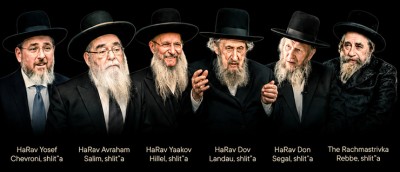
For the readership of the Bukharian Jewish Link, the presence of towering Sephardic luminaries like Harav Yaakov Hillel and Harav Avraham Salim standing shoulder-to-shoulder with Ashkenazi leaders like Harav Dov Landau, Harav Yosef Chevroni, Harav Don Segal, and the Rachmastrivka Rebbe is profoundly moving.
The delegation visiting Queens includes these towering figures of Torah leadership. Collectively, these leaders guide tens of thousands of talmidim, avreichim, and families throughout the Torah world, shaping institutions and communities whose influence extends far beyond the walls of their respective yeshivot. Their appearance in Queens is part of a historic 15-day North American mission that has brought Gedolei Yisrael to communities across the continent in an unprecedented effort to strengthen and sustain the Torah world. The fact that these Torah leaders have chosen to devote precious weeks away from their yeshivot, talmidim, and families underscores the extraordinary gravity with which they view the current situation. These are names that many people spend years hoping to encounter during visits to Bnei Brak or Yerushalayim, yet they will be right here in our own backyard.
In a testament to the miraculous Torah renaissance of our local Sephardic community, an exclusive, historic Kinus will take place at Beth Gavriel, bringing together rabbinic leaders from across Queens for a special Asifat HaRabbanim with the visiting Gedolei Torah. For many longtime residents, the gathering carries an additional layer of significance. A community that once struggled simply to preserve Jewish identity behind the Iron Curtain now finds itself hosting some of the greatest Torah leaders in the world. The journey from underground minyanim in Samarkand, Tashkent, and Bukhara to a historic rabbinic summit in Queens is itself a testament to the remarkable growth of the Bukharian and Sephardic community.
This intimate gathering will occur just ahead of the communal Maamad to follow at Yeshiva Chofetz Chaim. During this exclusive one-on-one session, our esteemed Rabbanim will hear firsthand about the gravity of the crisis. The Gedolim will share firsthand why they view the situation with such urgency and why they have undertaken this extraordinary mission.
A Blueprint For Permanence
While Keren Olam HaTorah was mobilized as an emergency relief measure, maintaining a $144 million annual lifeline requires a pace of fundraising that cannot continue indefinitely. The conversation in Queens and across the diaspora is necessarily shifting toward long-term survival.
To provide a permanent anchor, Dr. Paul (Pinchas) Volosov, a Baltimore-based healthcare entrepreneur, has proposed a paradigm shift: a $1 billion principal endowment fund. Modeled after university endowments and backed by Gedolei Hador, the fund would remain untouched, generating an estimated $50 million in annual returns to stabilize these organizations.
Raised by a single mother in Paterson, New Jersey, Dr. Volosov built a career restoring dignity to marginalized populations. He now applies that same mission to Torah institutions, arguing that organizations carrying the spiritual future of the Jewish people should not have to live under the indignity of constant financial panic.
The Inheritance Of Samarkand And Bukhara
For the Bukharian community, this conversation carries profound emotional weight. Our borough is a powerful intersection of immigrant memory and upward mobility.
The generation that hid Judaism in Samarkand, Tashkent, and Bukhara never dreamed that one day their grandchildren would be able to build thriving Torah communities openly in America. The question now confronting those communities is whether they will be content to enjoy that inheritance—or whether they will assume responsibility for preserving it.
Over the past several decades, the Bukharian and broader Sephardic community of Queens has built thriving shuls, yeshivot, charitable organizations, and Torah institutions that have become an integral part of the American Torah landscape. The community that once struggled simply to preserve Judaism is now helping shape its future.
This gathering is not intended solely for donors, community leaders, or rabbanim. It is a moment for every member of the community to demonstrate solidarity with the Torah world. The simple act of showing up sends a powerful message that the challenges facing the yeshivot and kollelim of Eretz Yisrael are not somebody else's concern, but our own.
For many younger members of the community, this may be the first and perhaps only opportunity to stand in one room with such a broad cross-section of Gedolei Yisrael. Moments like these are exceedingly rare, and their significance is often appreciated only years later. Many who attended historic gatherings of Gedolei Yisrael in previous generations still speak about them decades later.
The grandparents who preserved Judaism under oppression, and the parents who painstakingly built the thriving Torah life in Central Queens, are now passing the baton. When the Gedolim arrive in Queens on June 16, they are not merely asking the community to respond to a financial crisis. They are asking whether we are prepared to safeguard the inheritance entrusted to us.
The Torah world survived Communism, poverty, and exile. Now it needs us.
Maamad Kavod HaTorah
Tuesday, June 16, 2026 – 5:00 p.m.
Yeshiva Chofetz Chaim
76-01 147th Street, KGH
The entire community is encouraged to attend.
From Secret Minyanim To A Billion-Dollar Vision
Typography
- Smaller Small Medium Big Bigger
- Default Helvetica Segoe Georgia Times
- Reading Mode