



For One Extraordinary Day, The Kedushah Of Eretz Yisrael Filled Yeshiva Chofetz Chaim
Long before the first word was spoken, the air in Kew Gardens Hills felt charged. Streams of people—young families, roshei hayeshivah, local business owners, retirees, and bochurim—converged on the Rabbinical Seminary of America from every direction. There was an unspoken understanding among them: when the Gedolei Hador cross an ocean to bring a message, you clear your schedule and you show up.
In his opening remarks, Rabbi Zvi Belsky observed that attendance itself testified to something deeper. One does not leave work, family obligations, and daily routines to attend such a gathering unless Torah occupies a central place in life. Simply being present, the Rav suggested, reflected love of fellow Jews, love of Torah, appreciation for talmidei chachamim, reverence for rabbinic leadership, and a willingness to answer the call of the generation’s Gedolim.
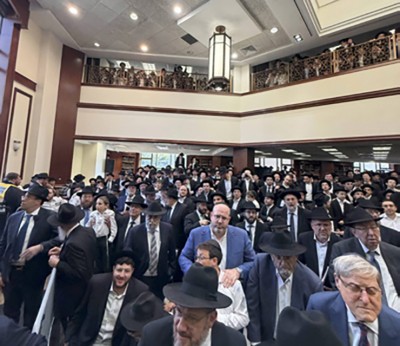
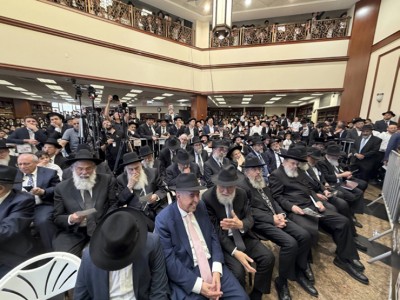
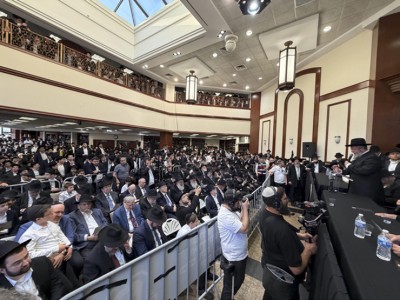
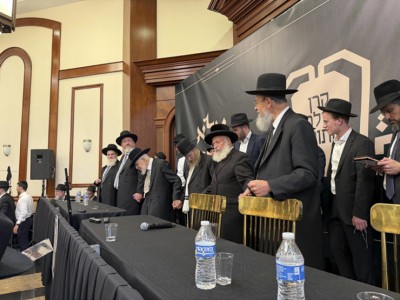
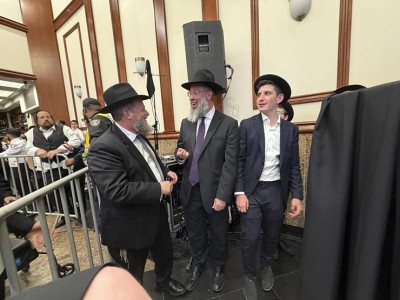
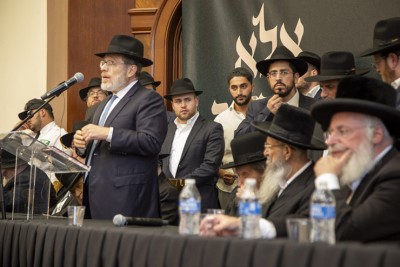
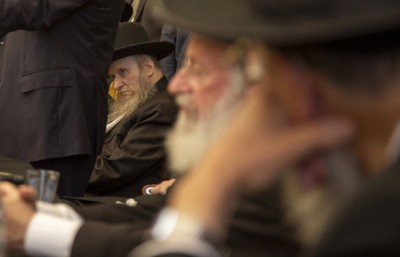
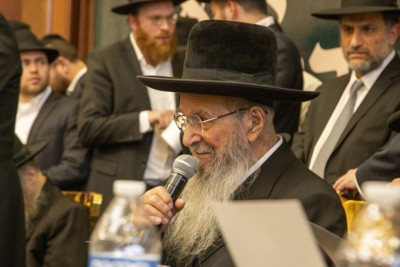
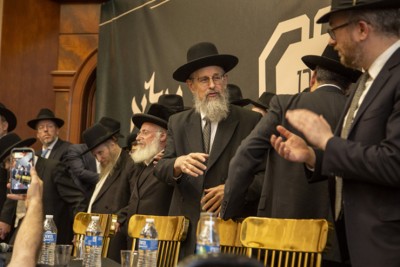
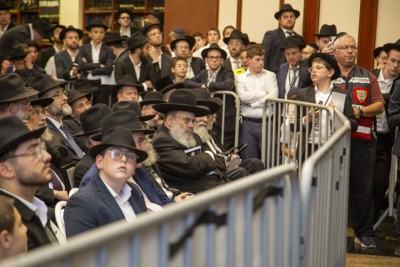
By late afternoon, Yeshiva Chofetz Chaim felt less like Queens and more like a pivotal gathering in the heart of Eretz Yisrael. Many attendees remarked that the event felt less like a fundraising campaign and more like a historic maamad kavod haTorah. Inside the beis hamedrash, it was standing room only. A sea of black hats and white shirts pressed together. Despite the air-conditioning working at full capacity, the heat in the room rose as bodies packed in shoulder to shoulder, creating an intensity that transformed the yeshivah into a single organism. The only seats available were for approximately one hundred community rabbanim. Outside, massive LED screens carried the proceedings to overflowing crowds standing and sitting in rows of rented chairs. Women followed the gathering from designated viewing areas. Throughout the lobby, additional screens allowed hundreds more to participate.
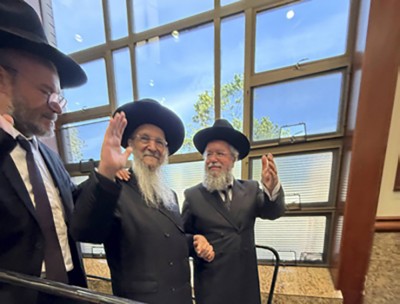
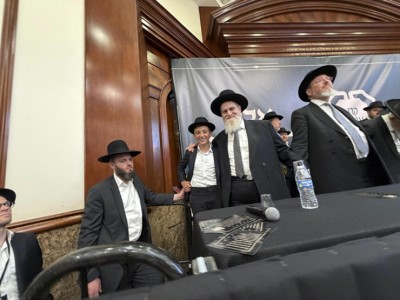
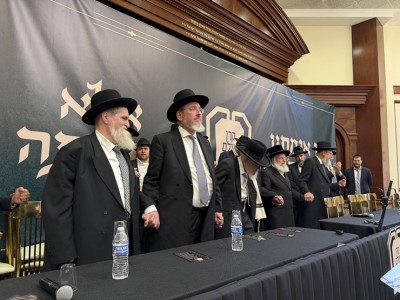
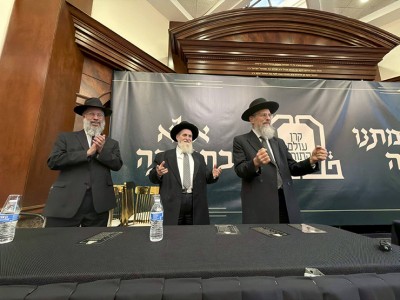
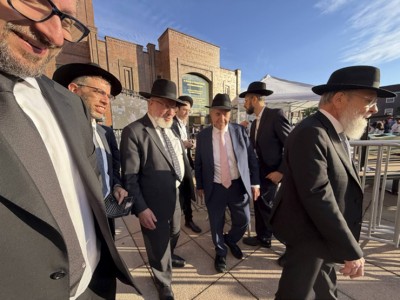
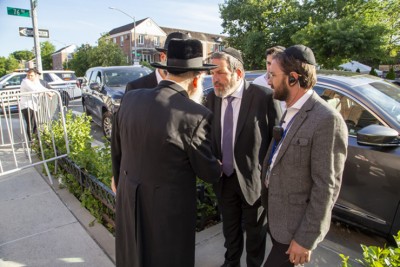
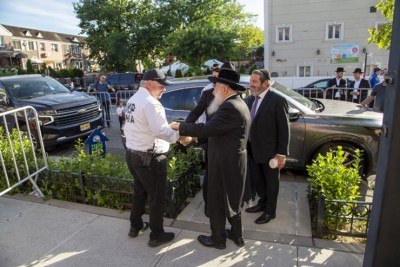
The dais itself told the story of the day. Ashkenazic and Sephardic leaders sat shoulder to shoulder. Community rabbanim shared space with roshei yeshivah, askanim, philanthropists, and public servants. Differences that often define communities seemed to disappear; everyone had come for one purpose. The scale of the maamad required extraordinary preparation. Members of Queens Shmira worked alongside fellow volunteers from Brooklyn and their in-house professional security personnel throughout the day. Security teams were assigned to the visiting Gedolim, while volunteers coordinated the steady flow of thousands arriving on foot from throughout the neighborhood. The operation was visible but unobtrusive, allowing the focus to remain where everyone believed it belonged: on Torah.
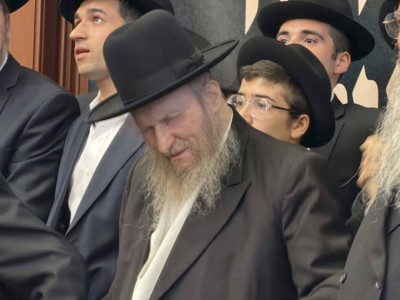
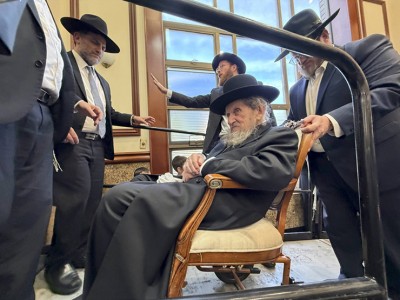
Even before the program began, the leaders themselves delivered the day’s first lesson. Special arrangements had been made to provide the senior Gedolim with a separate entrance. Yet when HaRav Dov Landau shlita (96), the Rosh HaYeshivah of Slabodka, arrived in his elegant wheelchair, the carefully planned route was quietly set aside. The Rosh HaYeshivah chose instead to enter through the entrance designated for the other rabbanim. The moment lasted only seconds. Yet for many who witnessed it, the message was unmistakable: this assemblage was rooted in yiras shamayim, not pageantry. Moments later, organizers urged the crowd to remain silent as the Rosh HaYeshivah entered. Thousands complied immediately. The stillness that settled over the packed makom Torah may have been one of the evening’s most powerful statements. Speeches paused, and the reverence in the room spoke volumes.
Later, when addressing the gathering, Rav Landau spoke about the challenges confronting the Torah world in Eretz Yisrael and emphasized that responsibility for its future cannot rest solely upon rabbinic leaders or major benefactors. Every Jew, the Rosh HaYeshivah stressed, possesses a share in sustaining Torah—through financial support, personal sacrifice, and raising children who cherish Torah values. The message was both simple and profound: the future of the yeshivos belongs to all of Klal Yisrael.
Little time was wasted on introductions. Again and again, those at the podium returned to a single theme: the survival of the Jewish people has never depended solely on military strength, political influence, or economic power. It has depended on Torah.
HaRav Akiva Grunblatt shlita, Rosh HaYeshivah of Chofetz Chaim, opened the program by citing a Midrash Rabbah in Bereishis. The descendants of Canaan, the Midrash teaches, were spared destruction because they showed a small act of honor to Yaakov Avinu’s levayah. If a single act of kavod could generate such zechus, Rav Grunblatt explained, one could only imagine the impact of thousands gathering together for the sake of kavod haTorah. The Rosh HaYeshivah emphasized a distinction that echoed throughout the asifah: this was not merely about supporting Torah financially; it was itself an act of kavod haTorah—a public declaration that Torah remains the center of Jewish life. Though separated from Yerushalayim by thousands of miles, the gathering demonstrated how deeply connected Queens remains to the Torah world of Eretz Yisrael.
One of the evening’s most powerful moments came during the address of HaRav Asher Weiss shlita (73). The Rav shared a story about his father and the Klausenberger Rebbe, both Holocaust survivors. After arriving in Auschwitz and losing most of his family, Rav Weiss’s father learned that the Rebbe was being held in nearby barracks. Risking his life, he slipped out under the cover of darkness to meet him. The next morning, the Rebbe asked why he wanted to know him. The young survivor’s answer echoed throughout the room: “If we don’t talk and learn, how will we survive?”
The Rebbe embraced him. What began as a meeting in Auschwitz developed into decades of learning together. Rav Weiss connected the story to Rabban Yochanan ben Zakkai’s historic plea during the destruction of the Second Beis HaMikdash: Ten Li Yavneh V’Chachameha. Give me Yavneh and its sages. Rabban Yochanan ben Zakkai understood that while the Beis HaMikdash could not be saved, the future of the Jewish people could. Torah would preserve what destruction could not erase.
Rav Weiss then painted a vivid picture of Yaakov Avinu approaching Mitzrayim. Before arriving, Yaakov sent Yehudah ahead to establish a beis talmud. The lesson was unmistakable: the yeshivah is not merely another institution within Jewish life; it is the foundation upon which everything else rests. “The yeshivah is our lifeline,” Rav Weiss declared. “Torah is the oxygen in our lungs.” The Rav added that Jewish history bears this out repeatedly. Wherever Jews established yeshivos, Jewish life flourished, grew, and endured. Wherever Torah institutions disappeared, communities eventually faded. The continuity of Klal Yisrael, Rav Weiss argued, has always depended upon preserving its centers of Torah learning.
HaRav Don Segal shlita (93) repeatedly returned to the idea that the gathering itself represented a tremendous kiddush Hashem. The Mashgiach recalled a story from Radin, where practical observers once questioned why religious Jews would involve themselves in an election they could never hope to win. The answer, Rav Segal explained, was that victory was never the objective. The goal was to create a kiddush Hashem by publicly demonstrating commitment to Torah and to Hashem.
HaRav Avraham Salim shlita (87) spoke emotionally about the pain of seeing bnei Torah portrayed by some as burdens rather than brachah. He described the anguish of witnessing those who devote their lives to Torah misunderstood and mischaracterized. Yet looking out at the thousands assembled before him, the Rosh HaYeshivah found reason for hope. The delegation had traveled to America hoping to strengthen others, but instead, they found themselves strengthened. Again and again, the visiting Gedolim remarked on the devotion they encountered. The crowds, the enthusiasm, and the commitment to Torah left a profound impression upon them.
Another moving moment came from Reb Reuven Wolf, president of Keren Olam HaTorah. Recalling stories from his father, a Hungarian Holocaust survivor, Reb Wolf described learning that efforts had once been made to save Hungarian Jews through funds that could not ultimately be raised. As a young man, he often wondered what he would have done had he lived during such a moment. Years later, when the Gedolim asked him to help lead Keren Olam HaTorah, he felt he had finally received his answer. The call had come; it was his turn to respond. Reb Wolf explained that for the past two years, Keren Olam HaTorah has historically delivered monthly support to every participating institution—more than 1,400 yeshivos and kollelim spanning every segment of the Torah world. That support has helped sustain the institutions despite extraordinary financial pressures. Yet the need remains immense. Thousands of additional bochurim continue entering the system, thousands more establish homes of their own, and the responsibility, Reb Wolf emphasized, belongs not merely to a handful of wealthy donors but to klal Yisrael as a whole.
As the afternoon turned to evening, the distance between Queens and Eretz Yisrael seemed to shrink. The struggles of the Torah world no longer felt like distant headlines. They felt personal and shared. The frenetic pace of the day gave way to an almost indescribable stillness. Thousands stood together in prayer. The silence that preceded the final t’filah was absolute. For a few moments, the entire maamad seemed united in a single hope. As the crowds slowly dispersed, the question posed by a young Holocaust survivor in Auschwitz continued to linger: “If we do not learn, how will we survive?”
Nearly two thousand years earlier, Rabban Yochanan ben Zakkai answered his generation's crisis with two words: Yavneh V’Chachameha. On a summer afternoon in Queens, thousands gathered to repeat that answer. For one extraordinary day, the kedushah of Eretz Yisrael did not feel thousands of miles away. It felt right at home in Yeshiva Chofetz Chaim. Join today at www.rayze.it/olamhatorah/qjl.
By Shabsie Saphirstein
They Crossed An Ocean For Torah
Typography
- Smaller Small Medium Big Bigger
- Default Helvetica Segoe Georgia Times
- Reading Mode