


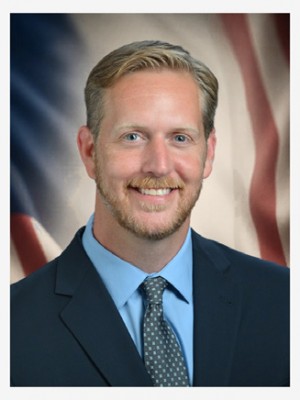
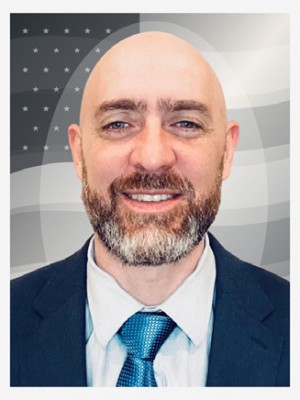
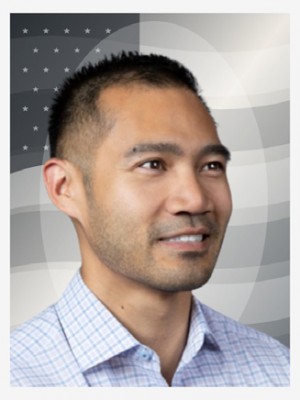
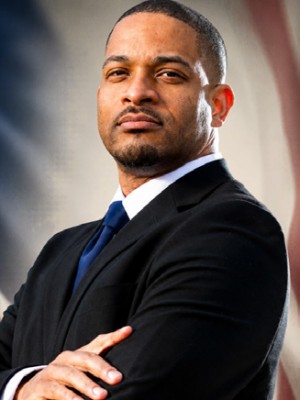
With November 3 approaching, contests from Washington to Albany place Jewish security,
religious education, affordability, and government accountability before Queens voters.
For many Queens families, the issues surrounding this year’s election are felt well beyond campaign advertisements and political debates. They are reflected in rising household expenses, yeshivah tuition bills, concerns about security outside synagogues, and the continuing uncertainty surrounding Israel and the Middle East.
On Tuesday, November 3, voters will decide who represents them in Congress and Albany, who leads New York State, and who oversees its legal and financial responsibilities. They will also consider five proposed amendments to the New York City Charter, several of which would change how municipal decisions are reviewed and approved.
For Jewish communities throughout Kew Gardens Hills, Forest Hills, Fresh Meadows, Rego Park, Flushing, Bayside, and Far Rockaway, these concerns are familiar. American policy toward Israel remains a pressing issue, antisemitism continues to trouble Jewish institutions, and families are looking for greater security and relief from mounting expenses.
Most candidates speak about safer neighborhoods, better schools, and more affordable living. Their differences become clearer when they explain how those goals should be achieved, how much authority government should exercise, and where public money should be spent.
Hochul and Blakeman Battle Over Albany’s Direction
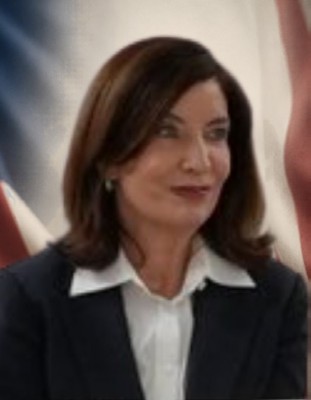
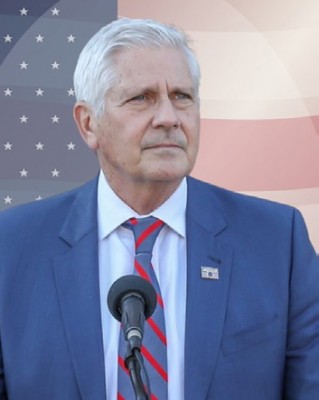
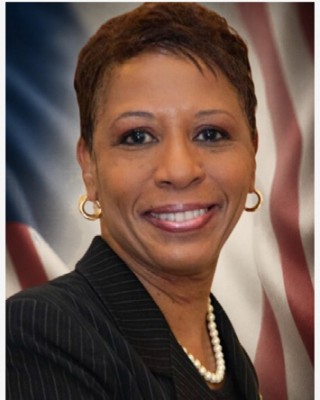
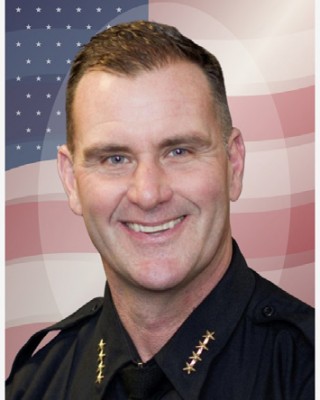
Governor Kathy Hochul is seeking another term against Nassau County Executive Bruce Blakeman in a contest increasingly focused on New York City’s political direction as well as policies coming out of Albany. Hochul, a Democrat, is running with former City Council Speaker Adrienne Adams, while Blakeman, the Republican and Conservative nominee, has selected Todd Hood as his running mate.
Hochul has emphasized public safety, education, and government services throughout her governorship. Her administration has supported security funding for religious institutions and proposed additional protections for houses of worship facing disruptive demonstrations. She has maintained ties with Jewish communal leaders and spoken publicly about Israel’s security.
Blakeman has made law enforcement, parental authority, taxes, and opposition to progressive policies central themes of his campaign. Since becoming Nassau County executive in 2022, he has taken a confrontational approach to public safety and government regulation. An outspoken supporter of Israel, he has frequently criticized anti-Israel activism that he considers antisemitic.
Their disagreement became particularly sharp during an October debate, when Blakeman criticized Hochul for cooperating with New York City Mayor Zohran Mamdani, whom he accused of antisemitism. Hochul defended the NYPD and Commissioner Jessica Tisch, rejecting suggestions that city police would fail to protect threatened communities.
The exchange touched on a concern extending well beyond City Hall. When Jewish institutions face threats or demonstrations become confrontational, the response of law enforcement and elected officials matters considerably more than political assurances.
Education is another issue close to home. Albany influences transportation assistance, mandated-service reimbursements, security grants, and regulations governing nonpublic schools. The continuing debate over substantial equivalency requirements has left Orthodox educational organizations concerned about preserving the independence and religious character of their schools, while supporters of stronger oversight maintain that the state must ensure an adequate secular education.
Hochul’s record allows voters to examine how those policies have been administered. Blakeman, meanwhile, has emphasized parental authority and limiting government interference, although that broader position does not establish how he would handle every existing yeshivah regulation.
Affordability adds another dimension. Between housing, property taxes, insurance, utilities, and tuition, many families have little room for additional expenses. Hochul has emphasized state programs and public investment, while Blakeman has campaigned on reducing taxes, regulation, and government spending.
Attorney General Race Brings Antisemitism Into Focus
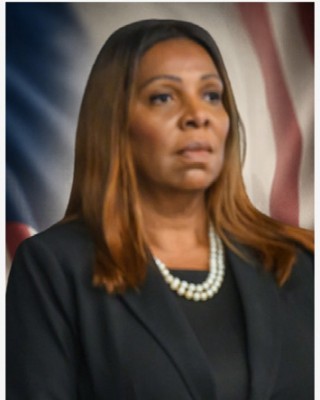
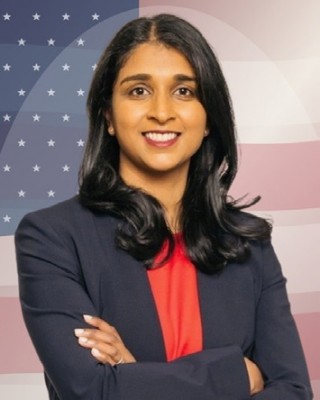
The contest between Democratic Attorney General Letitia James and Republican challenger Saritha Komatireddy has become particularly pointed over antisemitism, criminal enforcement, and the responsibilities of the state’s chief legal officer.
James, who has served since 2019, is widely known for her legal battles involving government officials and federal policies. Her office has also handled consumer protection, civil rights, and discrimination matters, work she cites in defending her record.
Komatireddy, a former federal prosecutor whose experience includes terrorism, organized crime, and financial investigations, has criticized James for what she considers misplaced priorities. She argues that the attorney general should devote greater attention to criminal enforcement, public safety, and antisemitism.
One disagreement concerns the International Holocaust Remembrance Alliance working definition of antisemitism. Komatireddy has advocated its adoption, viewing it as a useful framework for recognizing contemporary anti-Jewish hatred, including certain forms of hostility involving Israel.
The definition has gained support from numerous Jewish organizations, although critics have questioned how some of its examples might be applied to political expression. James has defended her office’s civil-rights work without adopting every measure proposed by her challenger.
Komatireddy has also faced controversy of her own. A meeting with representatives of Israel United in Christ, a group whose leaders have promoted antisemitic claims, drew criticism after she publicized the encounter and subsequently deleted the post. The meeting does not establish that she endorses the group’s beliefs, but it attracted scrutiny given her campaign’s emphasis on combating antisemitism.
For Jewish students and institutions, the attorney general’s role is far from theoretical. While local prosecutors generally handle individual hate crimes, the state office can become involved when discrimination, harassment, or institutional misconduct raises broader civil-rights concerns. The question is how that authority should be exercised and whether existing enforcement has adequately addressed the problems facing Jewish New Yorkers.
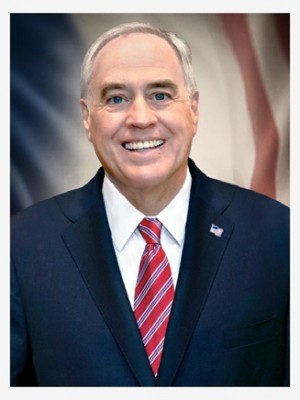
State Comptroller Thomas DiNapoli, meanwhile, faces Republican Joseph Hernandez in a quieter but consequential contest. DiNapoli has overseen New York’s financial auditing and public pension investments since 2007. Those responsibilities occasionally intersect with debates over investments connected to Israel, while also affecting the state’s broader fiscal health. Hernandez is seeking to replace him and change the direction of the office.
Congressional Races Put Israel Policy Front and Center
Nowhere are the differences over Israel more apparent than in the congressional contests. Members of Congress vote on military assistance, defense spending, sanctions, and the federal government’s response to antisemitism. With American policy toward Israel facing growing disagreement, individual representatives’ positions have taken on added importance.
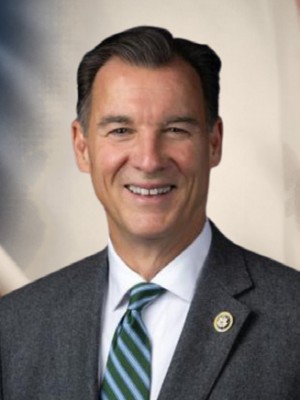
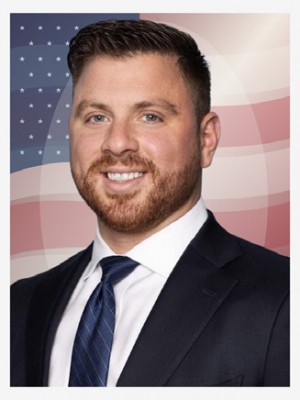
In the Third Congressional District, Democrat Tom Suozzi again faces Republican Michael LiPetri, whom he defeated in 2024.
Suozzi, a former Nassau County executive and Glen Cove mayor, has long emphasized bipartisan cooperation and support for Israel. He has also advocated federal protections intended to preserve access to houses of worship during demonstrations.
LiPetri, an attorney and former state assemblyman, has campaigned on stronger immigration enforcement, economic concerns, and opposition to established political leadership. Both candidates have expressed support for Israel and concern about Iran, although they differ over Washington’s broader approach to foreign policy.
Their October debate brought those disagreements into sharper focus. LiPetri challenged Suozzi’s relationship with Democratic leadership and criticized policies affecting household expenses, while Suozzi defended his bipartisan record and questioned his opponent’s alignment with President Donald Trump.
For voters concerned about Israel’s security, the distinction is not simply whether either candidate supports Israel, but how each would approach American foreign policy, regional threats, and cooperation across party lines.
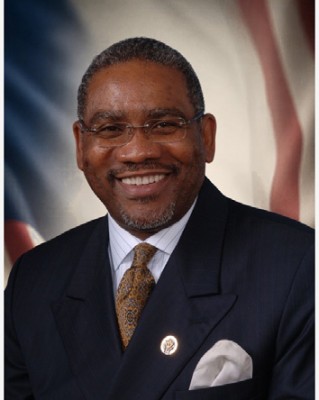
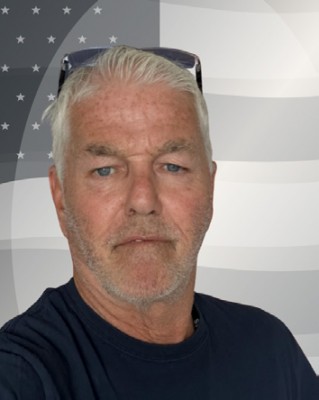
In southern Queens, Democratic Congressman Gregory Meeks faces Republican George Marsh in the Fifth Congressional District. Meeks has spent years involved in international affairs, including leadership responsibilities on the House Foreign Affairs Committee. His experience places him in debates over American diplomacy, foreign assistance, and Middle East security. Marsh is challenging the longtime incumbent on the Republican and Queens United lines.
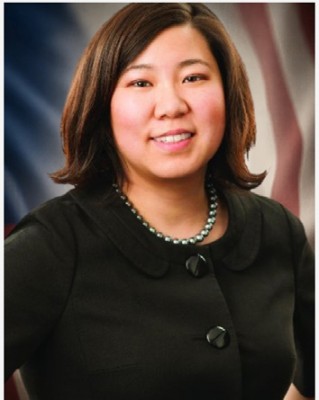
The Sixth Congressional District brings another familiar name to the ballot, with Democratic Congresswoman Grace Meng facing Republican Joseph Chou.
Meng’s position on the House Appropriations Committee gives her a role in decisions affecting federal spending, including programs benefiting religious institutions. She has supported Israel’s security and efforts to address antisemitism while maintaining close contact with Queens’ varied religious and cultural communities.
One program of particular interest is the Nonprofit Security Grant Program, which helps eligible institutions strengthen their facilities against potential threats. For a synagogue or yeshivah facing the cost of surveillance equipment, controlled entrances, and other security improvements, such assistance can make a meaningful difference.
Chou is challenging Meng on the Republican and Conservative lines. The contest places the incumbent’s congressional record before voters alongside a challenger seeking a change in representation.
The Seventh Congressional District presents a considerably different debate.
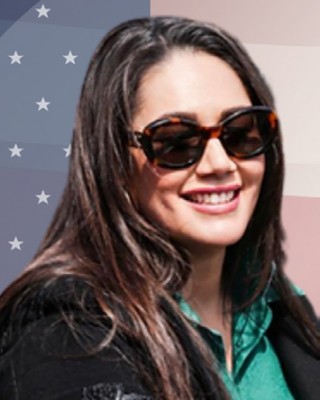
Democratic Assemblywoman Claire Valdez, associated with the Democratic Socialists of America, is seeking the seat previously held by Nydia Velázquez. Her opponents are Republican Melvin Rivera and Our Future Party candidate Priscilla Ghaznavi.
Valdez has made ending American military assistance to Israel an explicit part of her campaign. She has called for an arms embargo, supported Palestinian self-determination, and accused Israel of genocide in Gaza.
Her platform calls for suspending American military funding and arms transfers until Israel complies with international law and ends what she describes as violence against Palestinians. It also commits her to voting against future military funding, a position extending well beyond placing conditions on particular weapons transfers.
Supporters of such restrictions argue that American assistance should not contribute to military operations they consider unlawful and that greater resources should be directed toward domestic needs. Critics maintain that ending assistance could weaken Israel’s ability to defend itself against Iran and other regional threats.
Rivera and Ghaznavi are also seeking the seat, giving voters alternatives to Valdez’s stated approach to foreign policy and domestic priorities.
A related debate is unfolding in the Fourteenth Congressional District, where Democratic Congresswoman Alexandria Ocasio-Cortez faces Republican Diamant Hysenaj.
Ocasio-Cortez has become one of Congress’s most prominent critics of Israeli military policy. In April, she committed to opposing future American military assistance to Israel, including funding for defensive capabilities.
That declaration extended to systems such as Iron Dome, which intercepts incoming rockets and other aerial threats. The shift was significant because Ocasio-Cortez had previously distinguished between offensive weapons and defensive assistance. She has acknowledged Iron Dome’s protective role but argues that Israel should finance its own military equipment rather than rely on American funding.
Critics of restricting defensive assistance contend that doing so could leave Israeli civilians more exposed to attacks. Supporters of her position maintain that American taxpayers should not be responsible for financing Israel’s military capabilities.
Hysenaj is challenging Ocasio-Cortez on the Republican and Conservative lines.
Together, the Seventh and Fourteenth District races illustrate how much the debate over Israel has changed in Washington. What was once a largely bipartisan consensus over military assistance has become increasingly contested, with some candidates seeking conditions on aid and others calling for its elimination.
Albany Races Carry Consequences for Queens Neighborhoods
Although Congress determines foreign assistance, many decisions affecting Jewish schools and community institutions are made much closer to home.
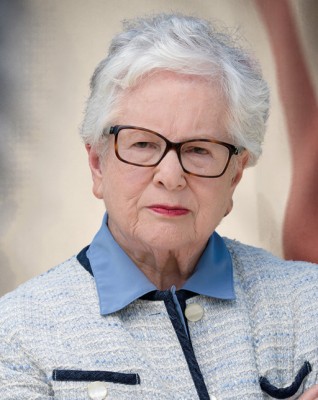
In the 11th State Senate District, longtime Democratic Senator Toby Ann Stavisky faces Republican Pamela Michos. Stavisky has extensive experience in higher-education policy and state funding, while Michos is challenging the incumbent’s approach to public spending and government priorities.
The open 12th District contest features Democrat Aber Kawas and Republican Han-Khon To. In the 13th District, Democratic Assemblywoman Jessica González-Rojas faces Republican John Patrick Healy after defeating incumbent Jessica Ramos in the Democratic primary.
González-Rojas has supported progressive policies involving housing, healthcare, immigration, and economic assistance. Her Assembly record offers voters a picture of her legislative priorities as she seeks a seat in the Senate.
In the 15th District, Democratic Senator Joseph Addabbo Jr. faces Conservative candidate Danniel Maio. Addabbo, a former City Council member, has worked on public safety, education, gaming legislation, and constituent services.
The Assembly contests are especially relevant in neighborhoods where Jewish schools, synagogues, and nonprofit organizations depend on state programs and assistance.
In the 23rd District, Democrat Pesach Osina faces Republican Thomas Sullivan for the seat being vacated by Stacey Pheffer Amato.
Osina, a longtime Far Rockaway resident, has spent more than two decades working in city and state government, including the City Comptroller’s Office, City Council Speaker’s Office, and State Assembly. His career has centered on constituent services and helping residents navigate government agencies, including during emergencies such as Hurricane Sandy and the COVID-19 pandemic.
Sullivan, a retired Army Reserve colonel who served for 30 years, has worked in finance and helped operate a family restaurant business. He has also pointed to his community involvement during and after Hurricane Sandy.
The candidates differ on aspects of election reform. Citizens Union, a nonpartisan government-reform organization, endorsed Sullivan, citing his support for much of its reform agenda and his commitment to campaign-finance transparency. The organization also acknowledged Osina’s government experience and community service but disagreed with his positions on open primaries and special-election reform.
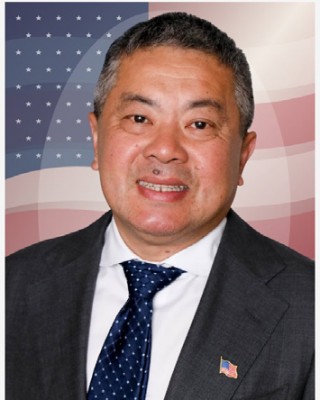
In the 24th District, Democratic Assemblyman David Weprin faces Republican Welson Chang. Weprin, a former City Council member, has represented neighborhoods containing significant Orthodox Jewish populations and has longstanding relationships with communal organizations. His legislative experience includes education, religious institutions, and constituent services.
Chang, running on the Republican and Queens United lines, is seeking to replace him, with affordability, public safety, and government responsiveness among the issues confronting the district.
In the 26th District, Democratic Assemblyman Edward Braunstein faces Republican Robert Speranza. Braunstein, an attorney and longtime legislator, has worked on consumer protection, public safety, and neighborhood concerns.
Democratic Assemblyman Andrew Hevesi faces Jonathan Rinaldi of the No Kings Party and David Kemp of the 4 Our Immigrants Party in the 28th District. Hevesi has concentrated much of his legislative work on housing, homelessness, and human services.
The open 30th District contest features Democrat Patrick Martinez and Republican Brandon Castro, while Democrat Nathaniel Hezekiah III faces Paul Nichols of the Answer Party in the open 32nd District.
In the 33rd District, Democratic Assemblyman Clyde Vanel faces Working Families candidate Oster Bryan. Vanel, an attorney and technology entrepreneur, has focused on economic development, technology, and government modernization.
Additional contested Assembly races include Democratic incumbent Diana Moreno against Republican Edward Lee in the 36th District, Democratic incumbent David Orkin against Republican Ruben Cruz II in the 38th, and Democratic Assemblywoman Catalina Cruz against Republican Ramses Frias in the 39th.
The legislators elected to these seats will make decisions involving education funding, housing, criminal justice, public spending, and services residents encounter far more frequently than the national political debates dominating television coverage.
Queens voters will also select judges for State Supreme Court and Civil Court positions. Five candidates are seeking three Supreme Court seats in the 11th Judicial District: Democrats Edwin Novillo, Oma Phillips, and Gail Adams, and Republicans Gary Muraca and David Bellon.
The countywide Civil Court contest includes Democrats Edmond Wong and Jasmine Valle-Bueno, Republicans Thomas Barra and Michael Mossa, and Julie Milner, who appears on both the Democratic and Republican lines. Additional municipal-district contests feature Janet Ellen Keller against Stephen Dachtera in the 2nd District and Michelle Ann McSweeny-Ortiz against William Shanahan in the 3rd District.
Unlike legislative candidates, judges are expected to apply the law impartially rather than advance political agendas. Their qualifications and professional experience therefore deserve particular attention.
In its October 23 evaluations, the New York City Bar Association rated Supreme Court candidates Edwin Novillo and Oma Phillips as Approved, while Gail Adams, Gary Muraca, and David Bellon received Not Approved ratings. In the countywide Civil Court contest, Edmond Wong and Jasmine Valle-Bueno were rated Approved, while Julie Milner, Thomas Barra, and Michael Mossa were rated Not Approved.
For the contested municipal-district seats, the association rated Janet Ellen Keller, Michelle Ann McSweeny-Ortiz, and William Shanahan as Approved, while Stephen Dachtera received a Not Approved rating. These are professional evaluations by the association, not official determinations of eligibility.
Five Ballot Proposals Put City Hall’s Authority Under Scrutiny
Alongside the candidates, New York City voters will encounter five proposed amendments to the City Charter developed by the Commission on Government Efficiency, established by Mayor Zohran Mamdani.
The administration describes the proposals as ways to make government faster, reduce unnecessary paperwork, and improve financial management. Yet several would also change public-review procedures or shift authority among city agencies, prompting concerns about how much oversight would remain.
The first proposal would simplify approvals for certain uses of public space, including sidewalk cafes, accessibility ramps, benches, and planters. It would remove mandatory public hearings for specified applications and eliminate the City Council’s authority to reject sidewalk-cafe approvals. Community boards and elected officials would continue receiving notice and could submit comments, but the formal review process would be reduced.
Businesses may welcome shorter approval times, but residents could lose established opportunities to raise objections in a public hearing. The concern is not whether government should operate efficiently, but whether efficiency should come at the expense of community participation.
The second proposal would reduce paperwork for city contractors, require quarterly meetings of the Procurement Policy Board, and eliminate a mandatory hearing involving a client-services report. It would also allow the mayor to delegate certain contract approvals, including approvals that currently cannot be delegated because of a contract’s value.
For nonprofits and small businesses that regularly encounter delays in obtaining city contracts, simpler requirements could be helpful. Those changes, however, must be weighed against the importance of oversight when public money is being spent.
The third proposal would accelerate certain street-safety projects, streamline transactions involving unused city-owned property, and expedite office leasing. It would alter existing approval procedures, including City Council review of certain property transactions and the Council’s ability to disapprove specified office leases.
In Queens neighborhoods, where street redesigns, bicycle lanes, and property decisions can generate considerable debate, such changes deserve close attention. Faster implementation may appeal to city administrators, but residents and their elected representatives could have fewer opportunities to challenge decisions before they are carried out.
The fourth proposal would establish a centralized construction-permitting system, allow additional Department of Buildings officials to issue approvals, and transfer waterfront permitting responsibilities to that agency.
Property owners and religious institutions undertaking renovations could benefit from shorter processing times, provided safety standards and accountability remain intact.
The fifth proposal would establish a target for city financial reserves equal to at least 12 percent of the previous year’s tax revenues and require a methodology for calculating contributions to the rainy-day fund.
The Office of Management and Budget, working with the comptroller, would develop that methodology. The 12 percent figure would serve as a reserve target rather than an immediate funding requirement. Contributions would remain subject to the regular budget process and could be spread over several years or deferred during financial hardship.
The administration argues that the amendments could shorten permitting and contracting delays and improve the use of municipal resources. Those benefits remain projections.
Government-reform organizations have reached differing conclusions. Citizens Union supports all five proposals, while other civic groups have objected to particular reductions in public hearings and legislative review.
For voters skeptical of the Mamdani administration’s broader political agenda, the proposals invite especially close examination. Still, their provisions differ: reducing contractor paperwork is not the same as eliminating a Council approval, and establishing a reserve target is not the same as changing how public space is regulated.
What makes these questions especially important is that approved amendments would outlast the current administration. Changes to the City Charter become part of the structure of municipal government, shaping how future mayors and agencies exercise their authority.
Looking Beyond Election Day
For Queens residents, the November election will help determine how Washington approaches Israel, how Albany handles education and public safety, and how city government makes decisions affecting local neighborhoods.
The concerns are familiar, even when the political arguments surrounding them are not. Families want to feel secure walking to shul, parents want their children educated without unnecessary financial strain, and communities want officials who understand their needs and respond when problems arise.
Those responsibilities will remain long after the campaign signs come down and the votes are counted.
Early voting continues through Sunday, November 1. Election Day is Tuesday, November 3, with polls open from 6 a.m. to 9 p.m. Voters can confirm their individual ballots and polling locations through the New York City Board of Elections.
By Shabsie Saphirstein
Queens Heads To The Polls As Israel, Antisemitism, And Public Safety Weigh On Voters
Typography
- Smaller Small Medium Big Bigger
- Default Helvetica Segoe Georgia Times
- Reading Mode