


After decades of failed bans, the City Council has voted to eliminate horse-drawn carriage rides. But the future of the horses, workers, and family businesses remains unsettled.
In 1989, New York City's Council recognized horse-drawn carriages as an integral part of its tourism industry. On October 22, 2026, that same legislative body voted overwhelmingly to put them out of business.
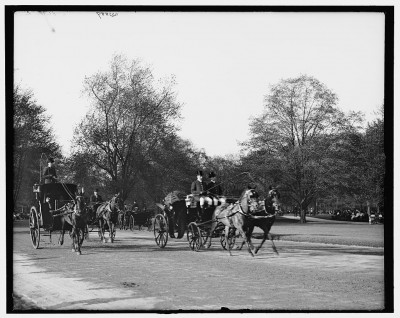
The carriages were part of Central Park's original design. In 1858, Frederick Law Olmsted and Calvert Vaux planned winding drives for sightseeing by coach, separate from pedestrian and horseback-riding paths. Three miles opened in 1859. By the early 1860s, park commissioners recorded afternoons when more than 3,000 carriages entered the gates, forming processions stretching seven miles. For fashionable New Yorkers, an afternoon drive was an occasion to see and be seen.
The treatment of working horses also helped inspire America's early animal-welfare movement. Henry Bergh founded the ASPCA in 1866, campaigning against the overworking and mistreatment of horses. As automobiles eventually displaced horse-drawn transportation, Central Park's carriages survived as recreation.
The modern battle over their future began in 2007, when Council Member Tony Avella proposed a ban. A city audit that year identified shortcomings in inspections and oversight, raising a question that would persist for nearly two decades: Was the industry beyond reform, or were existing regulations inadequately enforced?
Queens Council Member James F. Gennaro favored reform. His 2010 legislation limited carriage horses to nine working hours daily, mandated rest breaks, and required five weeks of annual vacation with pasture access.
Bill de Blasio promised a ban during his 2013 mayoral campaign. A 2014 proposal stalled; a 2016 compromise to reduce the number of horses and relocate stables inside Central Park collapsed after the drivers' union withdrew its support.
The collapse of a carriage horse named Ryder in August 2022 revived the campaign. Council Member Robert Holden championed another phaseout, initially proposing electric carriages as replacements, but the legislation stalled. In September 2025, Mayor Eric Adams directed city agencies to prepare for the industry's possible closure.
The political ground was shifting even before two tragedies in June 2026.
On June 9, a horse named Deniz collapsed and died in Central Park. A preliminary Cornell University veterinary report identified Japanese yew poisoning as the likely cause. The finding raised questions about toxic vegetation along carriage routes, and Deniz's owner subsequently sued the city.
Eight days later, 18-year-old Romanch Mahajan, visiting from India with his family to celebrate his high school graduation, suffered fatal injuries after their carriage horse, Samson, bolted. The driver had stepped away to photograph the family. According to Mahajan's father, the teenager fell while attempting to help his mother, who had fallen from the carriage.
The tragedy transformed the Council debate. Speaker Julie Menin championed legislation named Romanch's Law, while the Central Park Conservancy supported removing carriages from increasingly crowded park drives. The Conservancy reported eight horse-related incidents over the preceding 13 months.
Yet the precise cause of the fatal accident remained unresolved. In July, Con Edison detected low levels of stray voltage near Cherry Hill, where Samson had bolted. The union suggested an electrical hazard might have startled the horse, but testing conducted weeks afterward could not establish what caused the June 17 accident.
Mahajan's family pursued legal action against the city, while Gennaro argued that lawmakers should fully investigate the incident and consider strengthening existing safety requirements.
Gennaro introduced a competing reform bill addressing operating conditions and oversight. It remained in committee. On October 22, Gennaro attempted to extend the industry's phaseout until January 2030, allowing workers more time to prepare and owners to arrange for their horses.
The Council rejected the amendment, 43–6, then approved Romanch's Law, 40–7, with two abstentions. Gennaro's opposition failed to delay or prevent passage.
Unlike earlier attempts, the ban now had the support of the mayor, the Council Speaker, and a veto-proof legislative majority.
But its financial consequences remain unsettled.
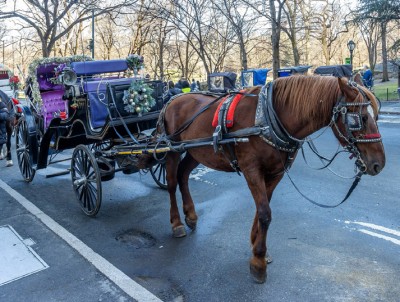
At a July Council hearing, city officials reported 68 licensed carriages, 208 licensed drivers, and approximately 160 horses. The industry supports immigrant workers, stable employees, and owners who have invested substantially in operating rights, equipment, and animals.
The legislation requires a workforce transition plan by April 1, 2027, including employment referrals, counseling, and training. It also directs the city to consider compensation for owners but guarantees neither replacement employment nor reimbursement for lost business value or outstanding debts.
Although the bill prohibits horses from being sold for slaughter or transferred into other carriage businesses, it provides no guaranteed, fully funded retirement arrangement for every animal.
The Transport Workers Union has threatened a constitutional challenge, arguing that the city cannot extinguish a licensed industry without adequately protecting its owners' property interests. Its attorney has cited a 1943 court case involving Good Humor ice cream vendors. However, New York's highest court ultimately upheld the city's authority to prohibit the street-peddling activity at issue, leaving the precedent's relevance to carriage operators uncertain.
As of October 28, Mayor Zohran Mamdani had pledged to sign Romanch's Law, which remained at the mayor's desk. If enacted and upheld, regular commercial carriage rides would end June 1, 2028. Limited permits would remain available for weddings, parades, film productions, and certain special events.
For 168 years, Central Park's carriages survived the transformation of New York around them. Now their departure has a proposed date, but the city has yet to settle what becomes of the horses and families whose livelihoods will disappear with them.
By Shabsie Saphirstein
The Last Ride: New York Votes To End A 168-Year Central Park Tradition
Typography
- Smaller Small Medium Big Bigger
- Default Helvetica Segoe Georgia Times
- Reading Mode