


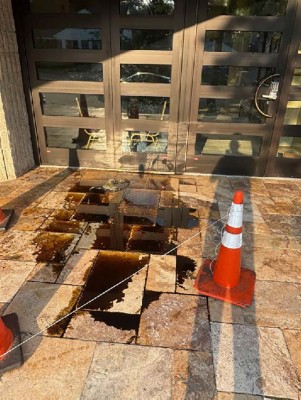
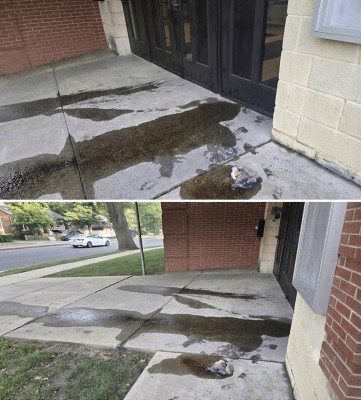
The motor oil and excrement thrown at two Orthodox synagogues in eastern Queens left more than a revolting mess. The attacks exposed a security problem that will not disappear once the entrances are cleaned, even if a suspect is eventually arrested.
Surveillance footage reviewed by the Bukharian Jewish Link shows a man sprinting past the Young Israel of Jamaica Estates at approximately 11:45 p.m. on Thursday, July 16, and throwing a substance toward the entrance. Similar materials were discovered the following morning at the Young Israel of Holliswood.
The close timing, proximity of the shuls, and substantially similar method strongly suggest that the incidents were connected, although police have not publicly reached that conclusion. The NYPD Hate Crimes Task Force is currently investigating.
The immediate priority is identifying whoever was responsible. The broader responsibility is determining whether Queens Jewish institutions are prepared for the next person who approaches a shul late at night and commits an act within seconds.
Layering Security and Preparation
New York City now has a law requiring the NYPD to develop and publicly disclose its plans for responding to demonstrations that threaten obstruction, intimidation, injury, or interference outside houses of worship. New York State has also made it a crime to block access to a house of worship or intimidate people entering one.
While those protections address demonstrations and confrontations outside occupied buildings, neither measure alone can stop someone who approaches quietly in the darkness, commits an act of vandalism, and disappears.
Preventing and investigating that kind of attack requires a different layer of preparation:
- Infrastructure: Shuls need functioning exterior cameras, sufficient lighting, clear views of entrances and surrounding streets, and recordings retained long enough to be recovered after an incident is discovered.
- Accessibility: Institutional leaders must know whether their cameras capture faces, clothing, vehicles, and escape routes, as well as who can retrieve recordings after hours.
- Coordination: Police, volunteer patrols, institutional leaders, and neighboring shuls should not learn about the same incident hours apart through informal messages. A coordinated notification system helps preserve recordings, locate witnesses, and increase patrols.
According to the City Council, antisemitic incidents accounted for 57 percent of reported hate crimes in New York City during 2025, even though Jewish residents make up approximately 10 percent of the city’s population. Jewish New Yorkers were targeted more often than every other group combined.
Every shul, yeshivah, and Jewish organization should regularly review its security arrangements. Exterior lighting changes, cameras become obstructed, passwords are forgotten, and contact lists become outdated. A plan that appeared adequate several years ago may no longer protect the building.
Taking Action Locally
The public will understandably focus on an arrest, but Queens must also decide whether these attacks will be treated as isolated acts of ugliness or as a warning to strengthen the protection surrounding Jewish life.
Institutions do not have to wait for an incident before reviewing their security. Shul, yeshivah, and organizational leaders may call the Queens Shmira hotline at 718-329-4444 to arrange an on-site security assessment.
Queens Shmira will walk through the property with institutional leadership to review exterior lighting, camera placement, recording retention, entrances, blind spots, emergency contacts, and response procedures. While this community-based assessment does not replace an NYPD inspection or professional security advice, it helps institutions recognize vulnerabilities before they are exploited.
After Two Queens Shuls Were Defiled, What Comes Next?
Typography
- Smaller Small Medium Big Bigger
- Default Helvetica Segoe Georgia Times
- Reading Mode