


Parashat Chukat contains one of the Torah’s most striking and challenging episodes.
Following the passing of Miriam, the well that had accompanied the Jewish people throughout their years in the desert disappeared. The nation found itself without water and turned to Moshe and Aharon with complaints and demands. Hashem instructed Moshe to speak to a rock, and water would emerge.
Instead, Moshe struck the rock.
Water flowed abundantly, but the Torah tells us that this moment carried profound consequences. The commentators offer different explanations, but among the most famous is the view of the Rambam, who explains that Moshe’s failing was anger.
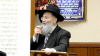
For Rabbi Zilber, this episode highlights one of the most difficult challenges in human life—not wealth, not poverty, not even suffering, but mastering one’s temper.
The Talmud speaks harshly about anger. The Sages teach that wisdom departs from an angry person. They warn that anger clouds judgment and causes a person to lose perspective. At the moment one becomes angry, he sees only himself.
Why is anger so destructive?
Because anger convinces us that everything depends on us.
A person who truly believes that every challenge comes from Heaven understands that difficult people, frustrating situations, and unexpected setbacks are often tests of character. If this challenge had not arrived through one individual, it would have arrived through another. The test was destined to come; only the messenger changes.
Rabbi Zilber often pointed to stories that illustrate this principle.
The Sefer Chassidim tells of an elderly father who left his son one final instruction before his passing.
“If you become angry,” he said, “wait until the next morning before acting.”
Years later, after a lengthy business trip overseas, the son returned home unexpectedly in the middle of the night. Entering his house, he heard a man’s voice speaking with his wife. Consumed with anger, he reached for his sword.
Then he remembered his father’s request.
He waited.
Moments later, he heard his wife say:
“Your father has been away for many years. He does not even know that he has a son, let alone a son who is now grown.”
The stranger was his own child.
One night of patience saved an innocent life.
Rabbi Zilber also loved the story of Rabbi Yechiel Michel of Zlotchov. Despite severe poverty, Rabbi Yechiel Michel refused to part with a treasured pair of tefillin inherited from his father. Eventually, however, he sold them in order to purchase a beautiful esrog for Succos.
Shortly afterward, through an accident in the home, the esrog fell and became invalid.
Many people would have exploded in anger.
Instead, Rabbi Yechiel Michel declared:
“I no longer have the tefillin. I no longer have the esrog. But I will not have anger in my house. One thing will remain here—peace.”
According to the story, Heaven valued that act of self-control even more than the sacrifice he had made to acquire the esrog.
Rabbi Nachman of Breslov testified that he was naturally hot-tempered, yet worked throughout his life to overcome anger completely. Likewise, the Tzemach Tzedek would carefully examine whether anger was ever truly justified. By the time he finished researching the matter, there was little anger left.
Perhaps that is the deepest lesson of Chukat.
People spend years pursuing possessions, honor, influence, and accomplishment. Yet the Torah reminds us that there is something even more valuable: the ability to remain calm when anger feels justified.
Sometimes the greatest victory is not winning an argument.
Sometimes it is refusing to lose yourself.
Parashat Chukat sponsored by Petr Fakhlayev & Regina Tokova
Rabbi Yitzchok Zilber, zt”l, dedicated his life to teaching Torah, and his impactful writings continue to inspire Jews worldwide. Copyright 2023 by The LaMaalot Foundation. Conversations on the Torah is catalogued at The Library of Congress. All rights reserved. www.LaMaalot.org
Parashat Chukat: The One Thing Worth Losing
Typography
- Smaller Small Medium Big Bigger
- Default Helvetica Segoe Georgia Times
- Reading Mode