


In the Soviet Union, where Jewish religious life faced severe restrictions, sacred Jewish books were often difficult to obtain. A volume of the Talmud or Shulchan Aruch could be extraordinarily precious to someone determined to continue studying Torah.
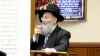
Rabbi Yitzchok Zilber, zt”l, dedicated his life to teaching Torah, and his impactful writings continue to inspire Jews worldwide. Copyright 2023 by The LaMaalot Foundation. Conversations on the Torah is catalogued at The Library of Congress. All rights reserved. www.LaMaalot.orgYet Rav Yitzchak Zilber recalled discovering something remarkable.
A friend possessed valuable volumes of the Talmud and Shulchan Aruch, but instead of keeping them in a place of honor, the books were sitting in a woodshed, covered in dust.
To their owner, they apparently held little practical value. To Rav Zilber, they were treasures.
Naturally, Rav Zilber offered to purchase them.
The encounter illustrates a fundamental truth: Two people can look at precisely the same possession and see entirely different things. One sees something unnecessary, while another recognizes an opportunity of immeasurable worth.
Rav Zilber uses this personal experience to explain one of the most puzzling episodes in Parashat Toldot.
The Torah describes Eisav returning from the field exhausted and hungry. Yaakov was preparing a lentil stew, and Eisav demanded some of the food.
Yaakov responded with an unusual proposal: Eisav should sell the birthright in exchange for the meal.
Eisav agreed, declaring that the birthright was of little use to someone facing death from hunger. The Torah concludes that Eisav ate, drank, rose, and departed, demonstrating contempt for the birthright (Bereishit 25:29–34).
Why was Yaakov so eager to acquire it?
Rav Zilber explains that before the establishment of the Mishkan and the later appointment of the Kohanim, the firstborn sons held a special responsibility in the service of G-d.
The birthright was therefore much more than a family distinction or an inheritance privilege. It carried the opportunity, and responsibility, to perform sacred service.
For Yaakov, this was something worth pursuing.
Eisav, however, viewed the same responsibility very differently. Sacred service involved obligations, restrictions, and accountability. Eisav had little interest in accepting those limitations.
The birthright that Yaakov treasured was, to Eisav, an unwanted burden.
Rav Zilber notes that the sale took place, according to the Midrash, on the day their grandfather Avraham passed away. Yaakov had prepared lentils as a mourner’s meal for Yitzchak, while Eisav returned exhausted from a violent encounter.
The Torah carefully records that Eisav received bread and stew, ate, drank, and departed. Rav Zilber emphasizes these details in discussing the legitimacy of the transaction and Eisav’s willing rejection of the birthright.
The comparison to the dusty books in the Soviet woodshed is striking.
The books had not lost their holiness or significance simply because their owner failed to appreciate them. Their true value remained unchanged.
Similarly, Eisav’s indifference could not diminish the spiritual importance of the birthright.
The lesson extends well beyond possessions. Opportunities to study Torah, perform mitzvot, and strengthen Jewish life may appear burdensome to one person and priceless to another.
The difference lies not in the opportunity itself, but in the eyes of the person considering it.
Rav Zilber recognized the value of sacred books gathering dust in a woodshed. Yaakov recognized the value of a sacred responsibility that Eisav was willing to surrender.
Both remind us that some of life’s greatest treasures are precisely those that others fail to appreciate.
Parashat Toldot is sponsored by Isak & Miryam Nissanov and Boris & Ilanit Nissanov.
Rabbi Yitzchok Zilber, zt”l, dedicated his life to teaching Torah, and his impactful writings continue to inspire Jews worldwide. Copyright 2023 by The LaMaalot Foundation. Conversations on the Torah is catalogued at The Library of Congress. All rights reserved. www.LaMaalot.org
Parashat Toldot: A Treasure Gathering Dust
Typography
- Smaller Small Medium Big Bigger
- Default Helvetica Segoe Georgia Times
- Reading Mode